Ultimate Lead Scraper
A B2B lead engine that finds companies worth selling to, works out how to reach them, scores each one out of a hundred, and hands them over in a dashboard you can filter and export. Eighteen directory and map sources behind two scraping engines, a free MX check in place of a paid verification API, and a weekly GitHub Actions run that keeps the corpus fresh. No paid service anywhere in it.
Two engines, because one is not enough
The richest directories are the ones that do not want to be read. Clutch, GoodFirms, Sortlist and DesignRush sit behind Cloudflare and return 403 to a plain Playwright scraper. Patchright fails too, and Sortlist goes further and TLS-fingerprints plain Node fetch while curl on the identical URL is served normally. So there are two engines rather than one: the ordinary scraper for Maps, OpenStreetMap, GitHub and the open directories, and CloakBrowser, a stealth Chromium with patched fingerprints, for the protected ones. Which engine fetched a lead is recorded on the lead, because a figure whose provenance is unknown is not evidence of anything.
The pipeline is one function, not two
Clean, dedupe on a normalised website or name key keeping the richest merged record, drop anything outside the ICP, crawl each company site for emails and socials, verify the mail domains, drop anything left with no reachable contact point, classify, score, cut below 35. The weekly run and the per-user runs call the same function. That was deliberate. The moment a personalised path gets its own slightly different pipeline, somebody is being served second-class data and nobody finds out for months.
A score has to be arguable
Every lead carries a 0-100 score from four weighted pillars: reachability 35, credibility 35, source quality 20, profile completeness 10, plus small bonuses for a premium industry or enterprise size, clamped at 100. A verified email is worth 22 and an unverified one 12, because the difference between those two is the entire difference between a list and a pipeline. Tiers fall out of the number at 75, 55 and 35. The point of writing it down this way is that someone can disagree with a weight and change it, rather than being asked to trust a black box.
A tagger that reads the website
The rules classifier only ever sees metadata, and metadata lies by being vague: a category of Software Company or IT Services passes the ICP filter and matches no taxonomy bucket at all. I measured nine in ten sampled generic categories classifying as null, so those leads arrived untagged and were dropped as noise despite being good ones. The fallback fetches the homepage as clean Markdown through Jina Reader and runs the same matcher over the real prose. It is deliberately timid: it never overwrites a rules result, matches whole words only so bi cannot be found inside ambient, needs two hits before it will commit, and caps its own confidence below the rules pass to leave room for a model later.
Personalised leads, and the shortcut I did not take
A saved search is a filter over the existing corpus. The tempting version of live leads for this user is a cron that re-runs that filter and presents the rows as new, which returns the same stale records forever and looks like a working feature from the outside. Real personalised leads mean translating the filter into actual scrape jobs, so each source's own vocabulary is mapped from industry and region onto tokens already proven in the curated config, and the result is a synthetic config in exactly the shape the existing scraper already eats. Two users asking for the same segment trigger one scrape attributed to both, so cost scales with distinct searches rather than with users.
Saying which leads are actually new
A new saved search is backfilled from the corpus immediately, because an empty screen is a bad first impression. Those leads are labelled From corpus and the ones a run actually found are labelled Fresh, and the dashboard never shows a status that is not backed by a real row in the runs table. A search no source can cover says so by name instead of succeeding emptily, and a dispatch failure is marked failed with its reason rather than sitting on pending looking busy.
Free was the constraint, not the boast
Email verification is a DNS MX lookup rather than a paid API, and a lookup that fails is recorded as unknown rather than dead, so a flaky resolver never discards a good lead. Scheduling is GitHub Actions: a weekly full scrape that runs the test suite as a gate before it is allowed to write anything, and a daily personalised worker with a concurrency group so two workers cannot claim the same queue. Storage is Supabase, with row-level security and a column-level grant so a signed-in user can change a lead's status and nothing else.
Highlights
- Eighteen sources across two engines, with the engine that fetched each lead recorded on it.
- CloakBrowser gets past the Cloudflare-protected directories that return 403 to Playwright.
- Merge-dedupe keeps the richest record, so Clutch's firmographics and GitHub's email both survive.
- 0-100 score across reachability, credibility, source quality and completeness, with the weights written down.
- A website tagger rescues the nine-in-ten generic categories the rules pass leaves unclassified.
- Personalised searches run real scrapes instead of re-filtering stale rows, grouped so one scrape serves many users.
- Fresh and From corpus are labelled differently, and no status appears that a run row does not back.
- Free MX verification, GitHub Actions scheduling, Supabase with row-level security. No paid API anywhere.
- 209 unit tests, run as a gate before the weekly scrape is allowed to write.
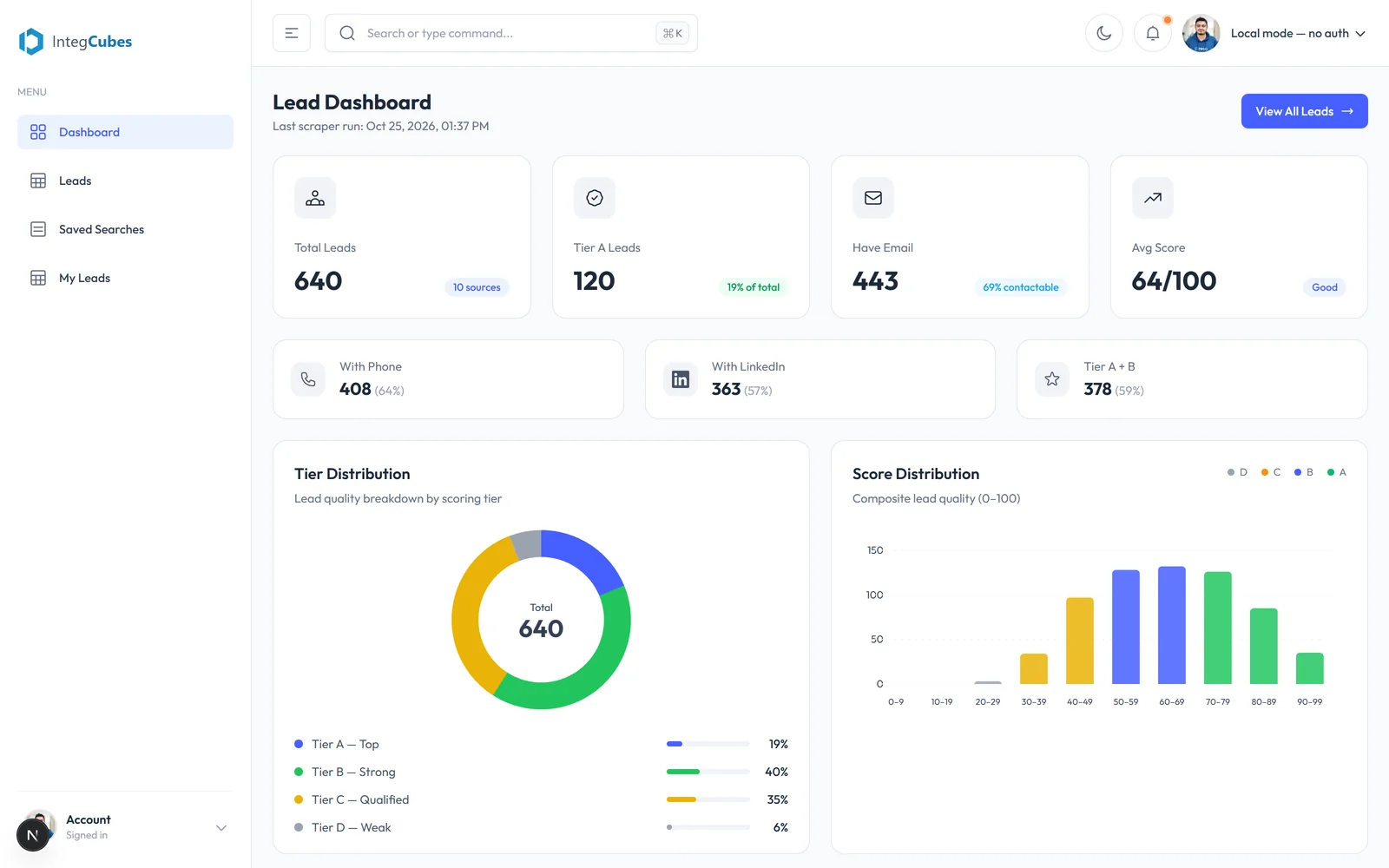
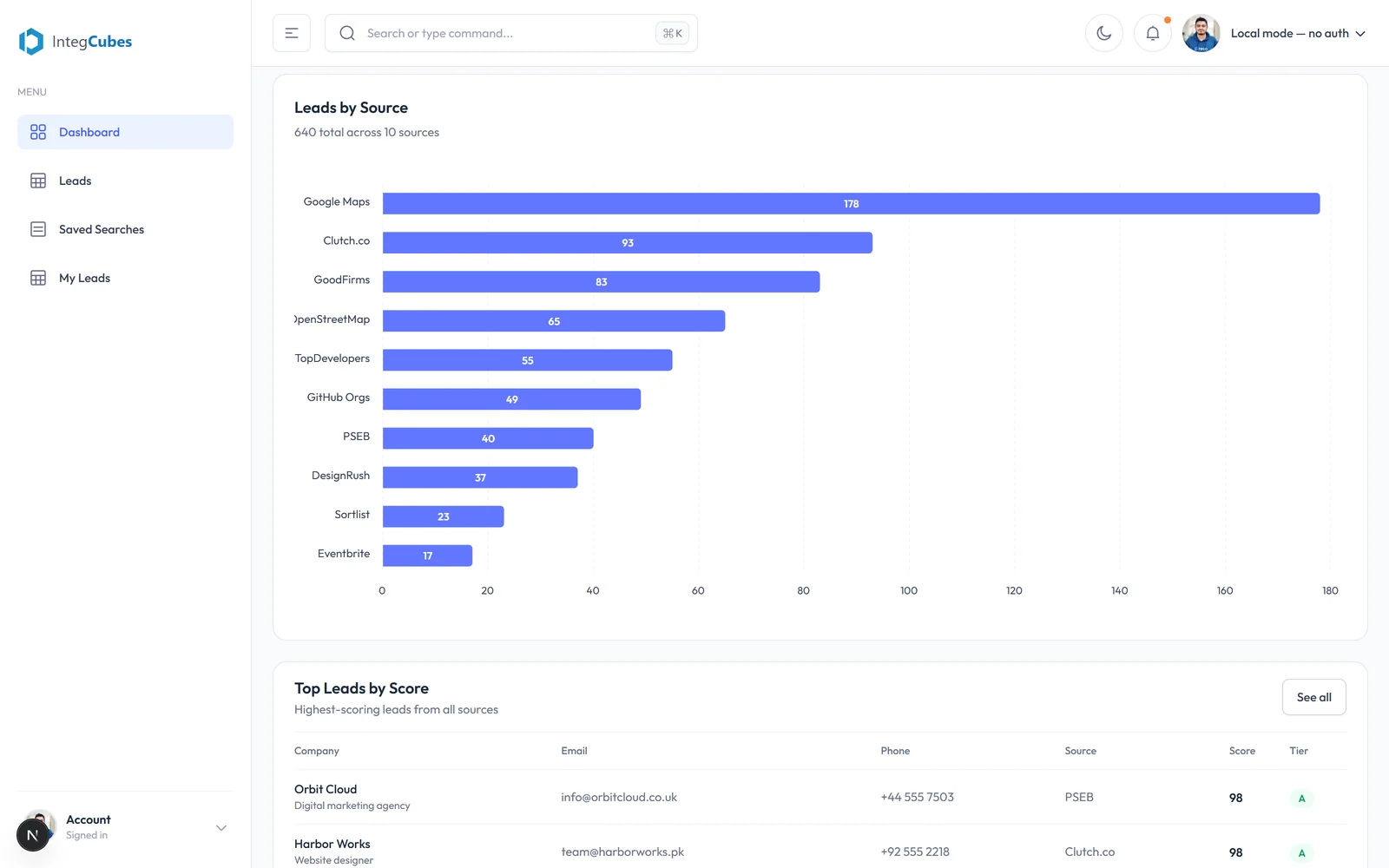
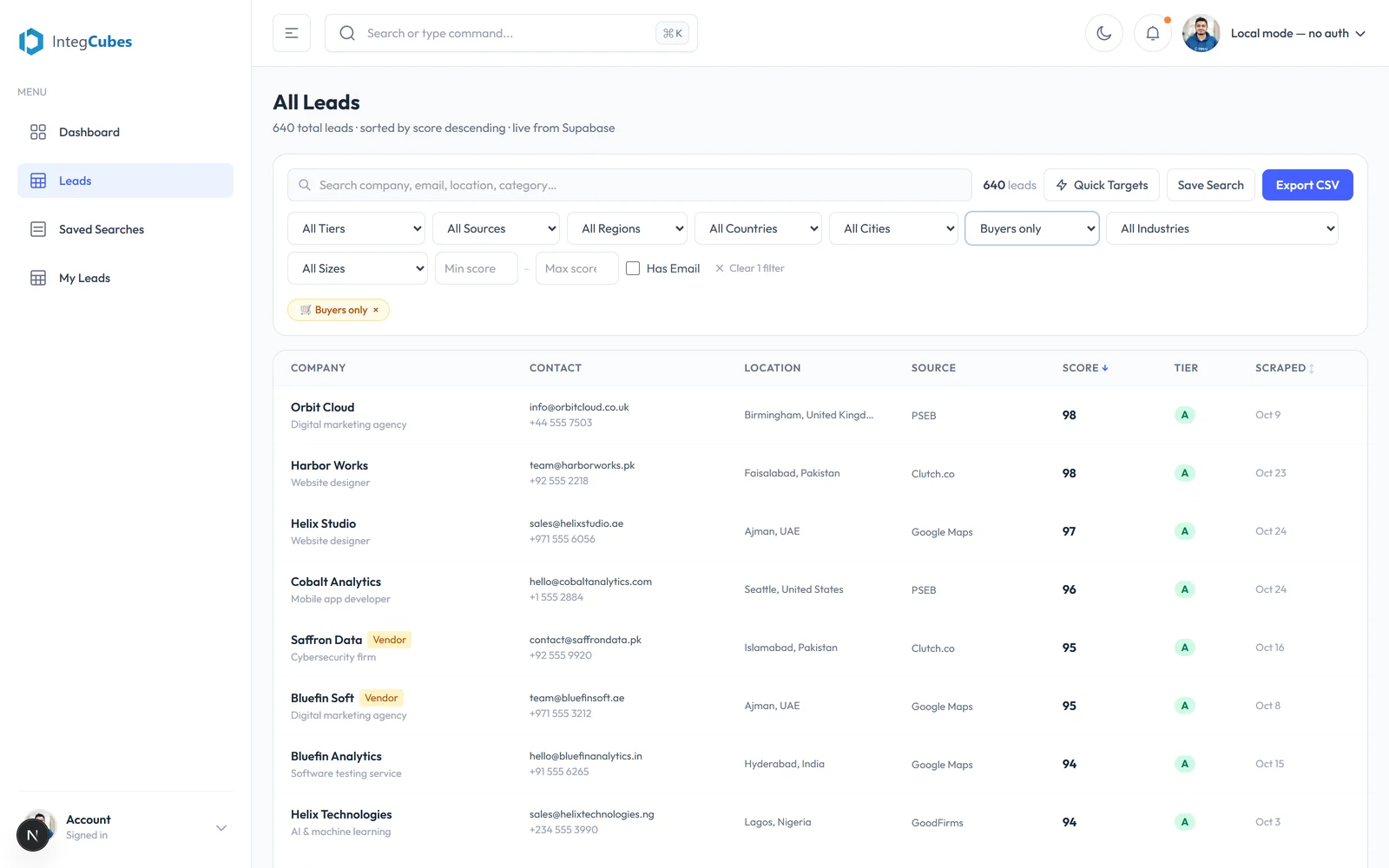
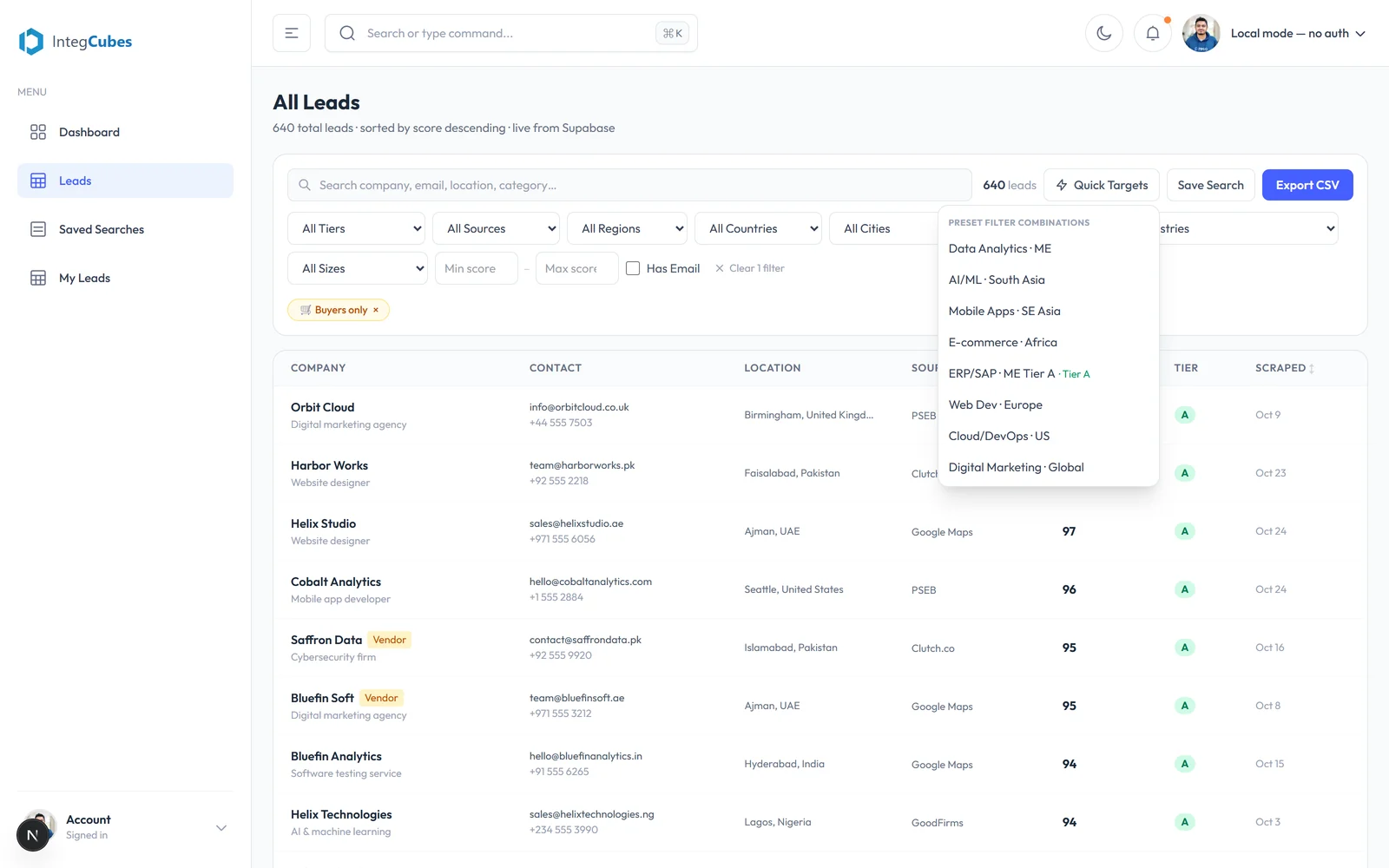
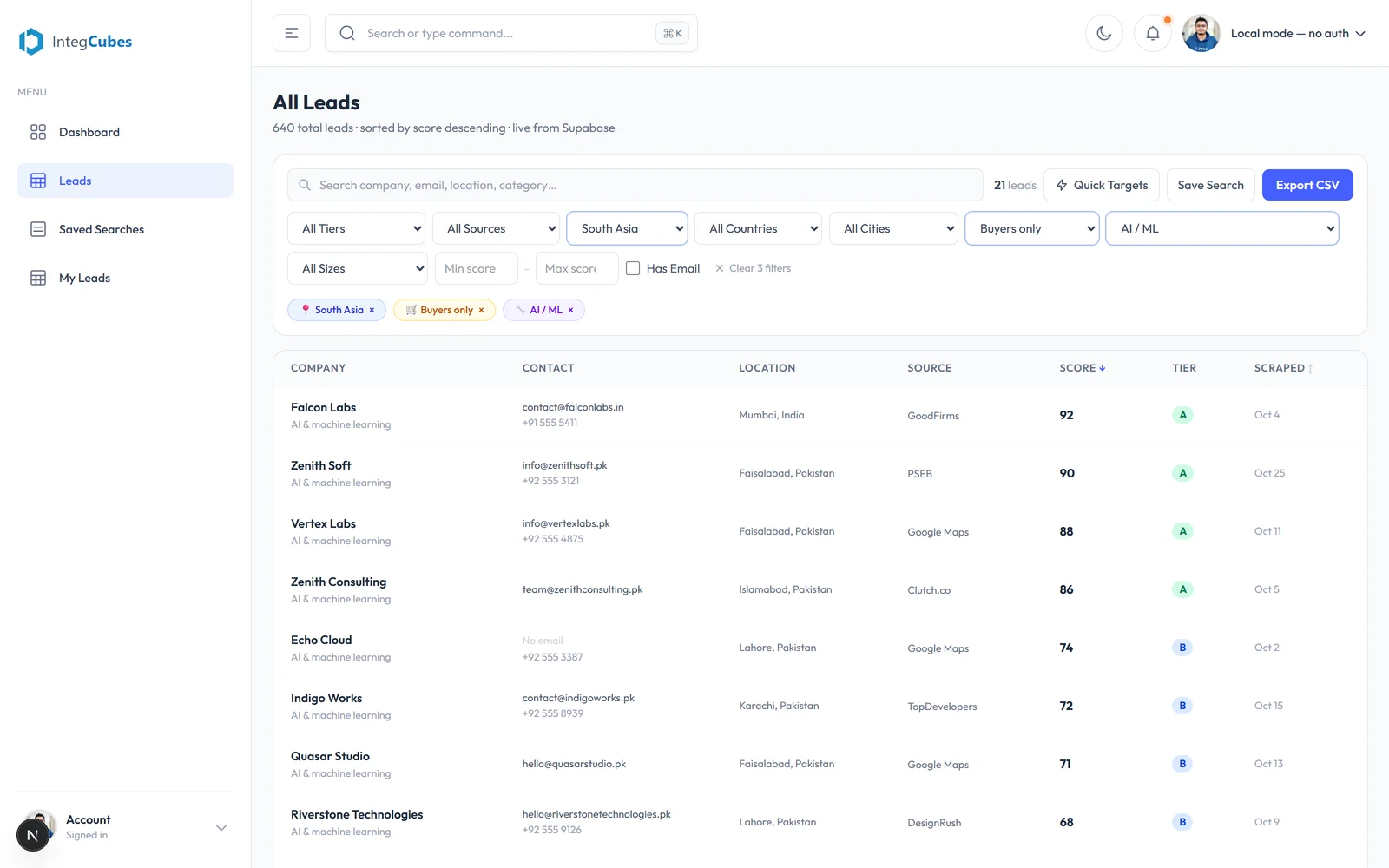
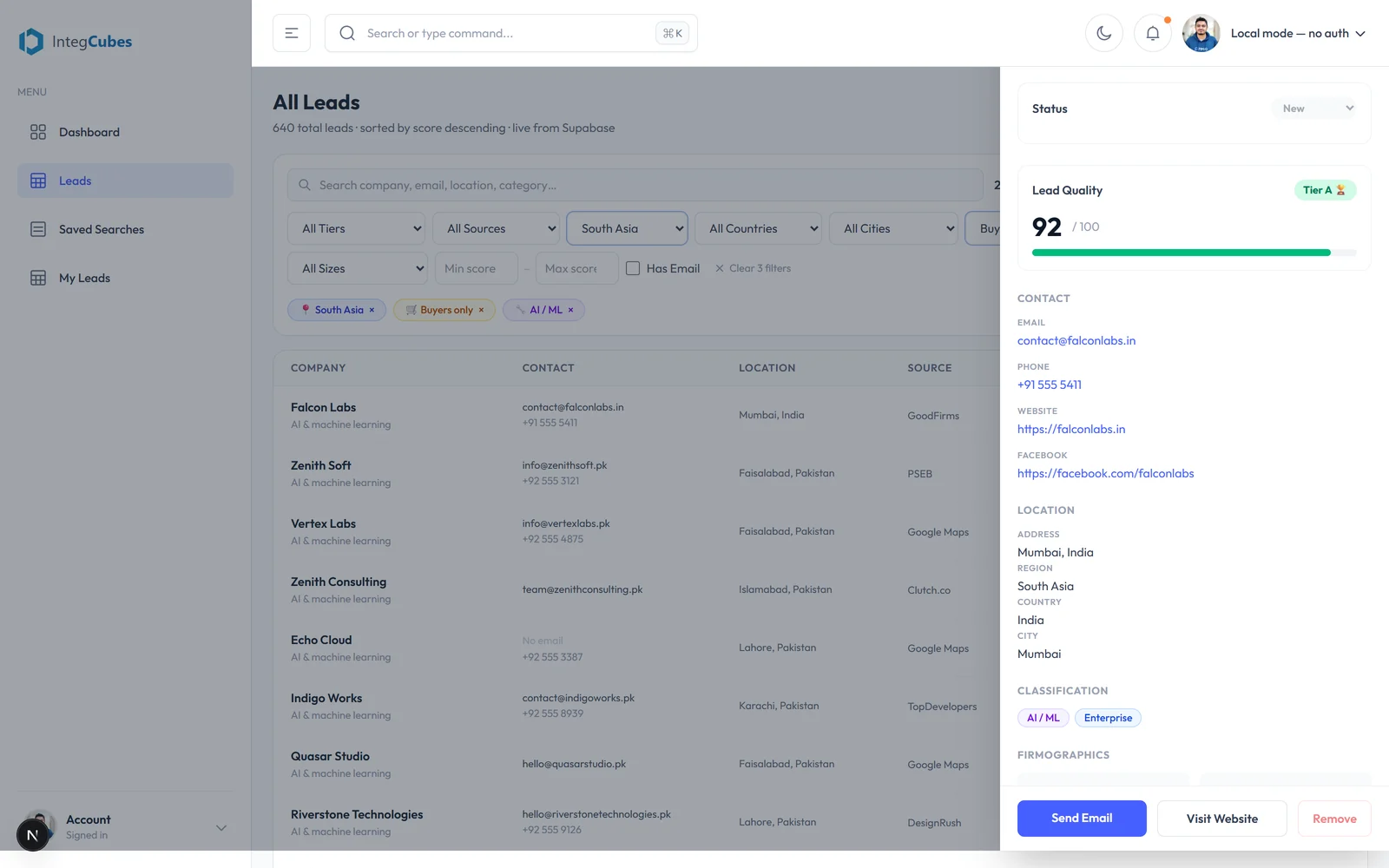
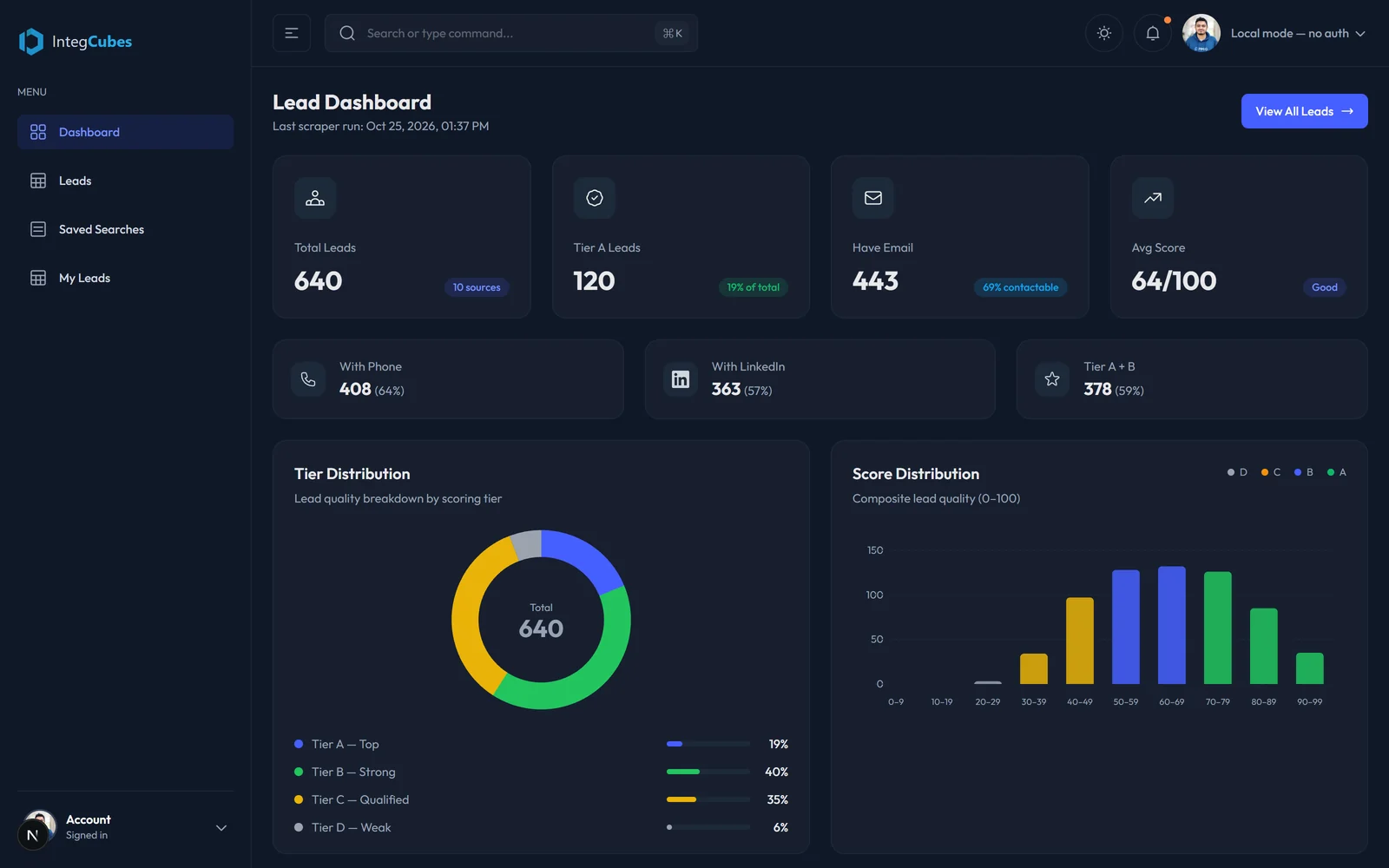
The dashboard in these shots holds 640 invented companies from a seeded generator, not a real scrape. Every phone number is a 555 number and the domains were never checked against real sites, so nothing here should be read as a result: 640 leads, 69% contactable and an average score of 64 are properties of the demo file. Two real quirks are visible, and naming them is better than cropping them out. In the detail drawer the company name and close button sit behind the sticky header, which is why the panel appears to begin at Status; raising the drawer above the header is the fix. In the sources chart OpenStreetMap is clipped to penStreetMap by a label column too narrow for the longest name. The header also reads live from Supabase on every page because that string is hardcoded, while these shots are served by the CSV fallback. Saved Searches and My Leads are not shown at all: both read straight from Supabase and show an empty state without keys.