Enterprise ERP
The internal operations app behind peakpk.store, order intake, fulfilment, inventory, team roles and reminders in one place. Built so the business runs on something other than a WhatsApp thread and a spreadsheet, with the rules that matter enforced in the database rather than in the UI.
Why it exists
Orders arrived over WhatsApp and Shopify, each carrying a Strava link, a 3D model, a payment state and a designer to assign. Tracking that across a chat thread and a spreadsheet does not survive growth, and nothing in it could answer what is low on stock or what is still unpaid without someone reading every row.
Built around the order
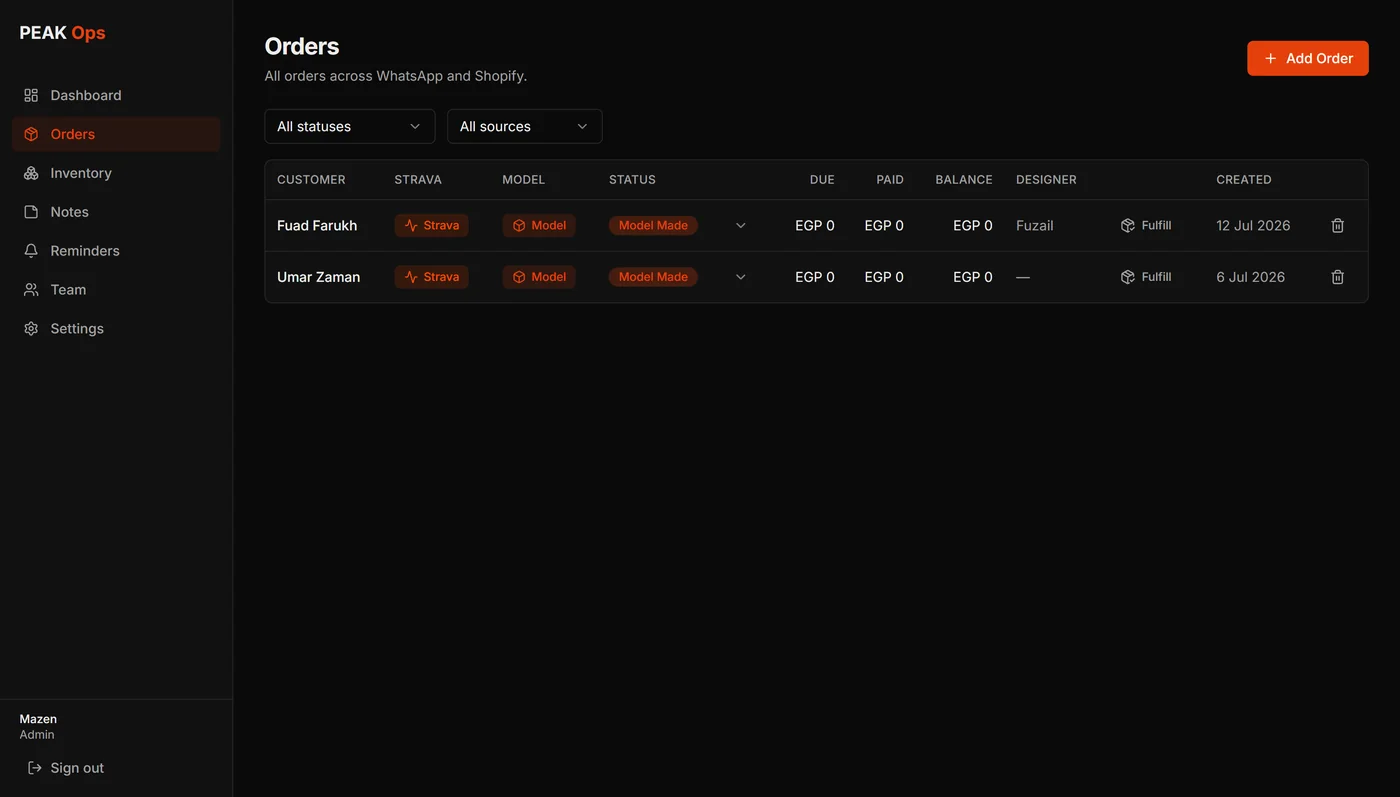
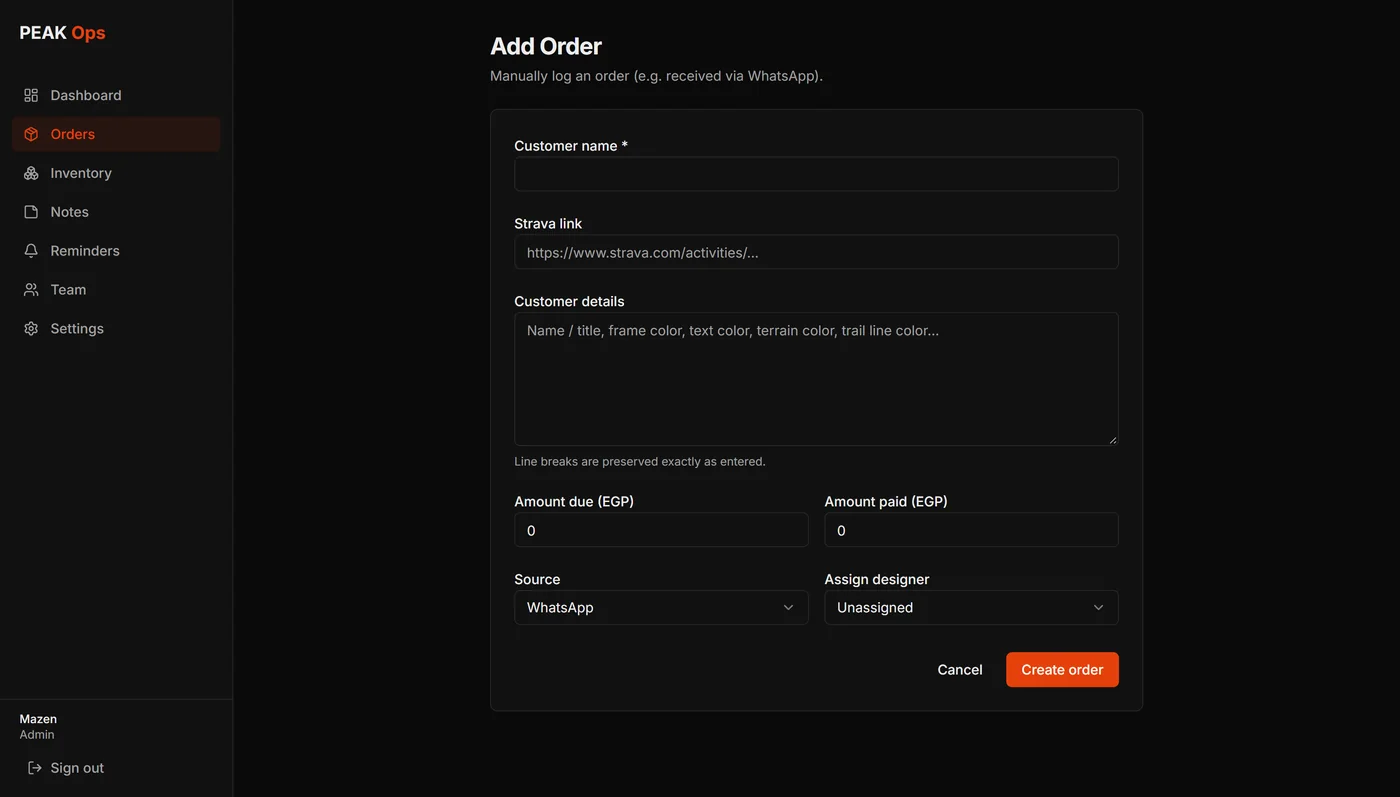
The orders table is the spine: customer, Strava activity link, 3D model link, inline status, the financial columns (due, paid, balance), the assigned designer and a fulfil action, all on one row. Intake is a single form that accepts the messy reality, with a freeform details field beside the structured ones, because customers do not write to a schema.
The status pipeline is the product
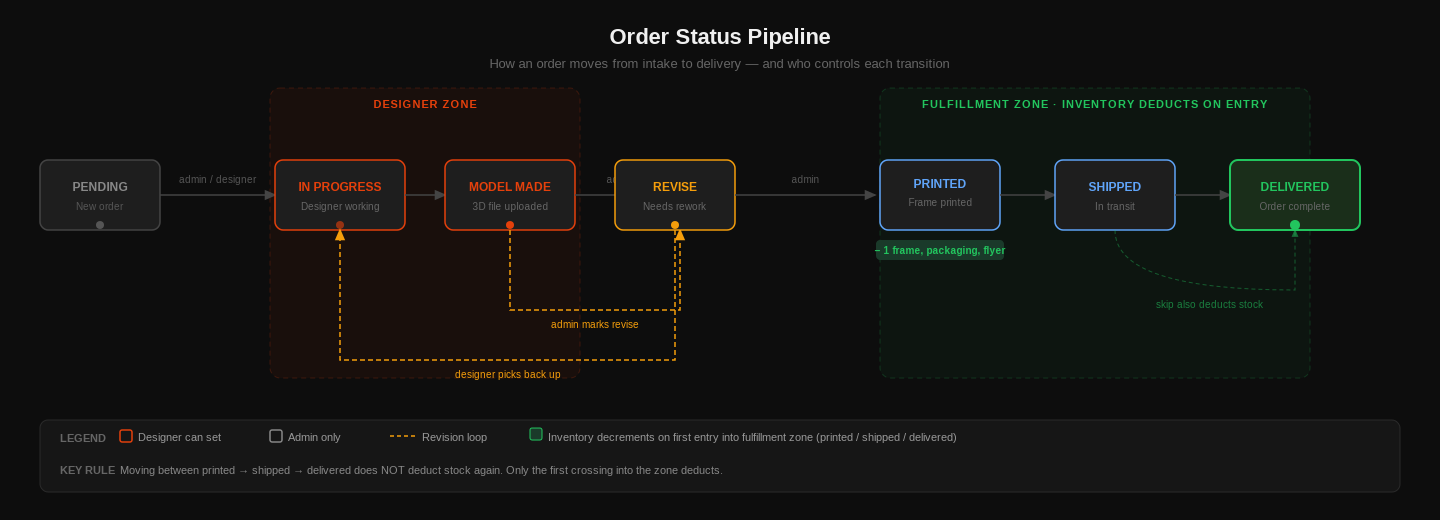
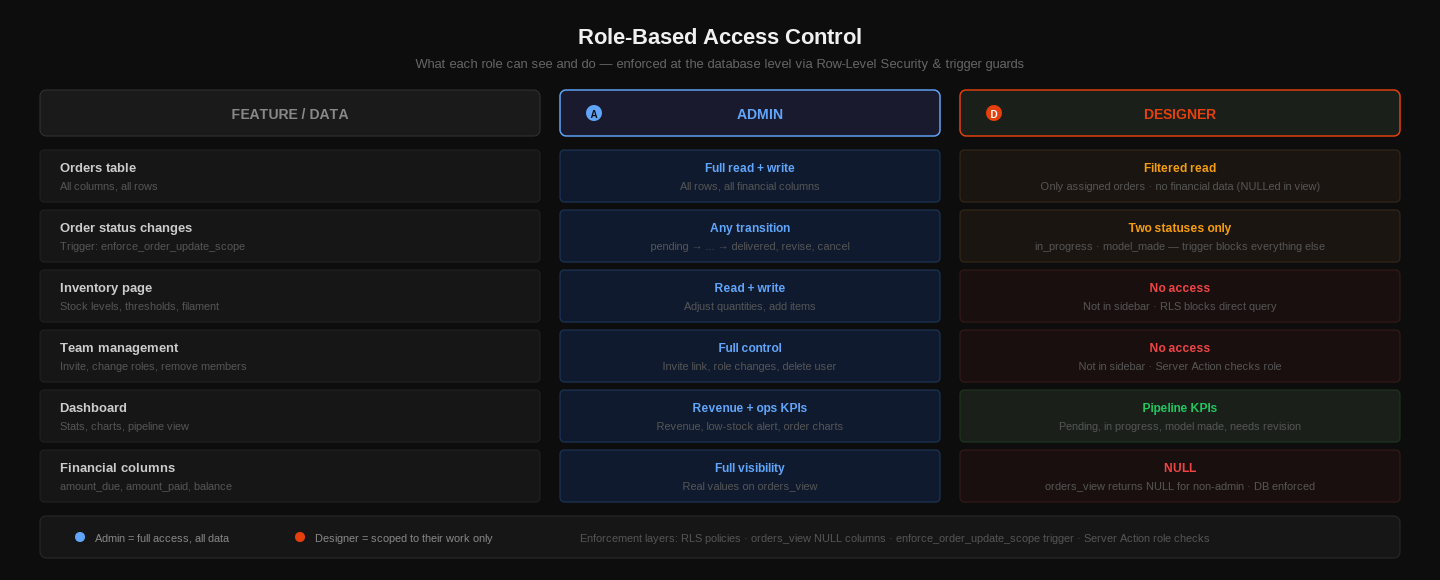
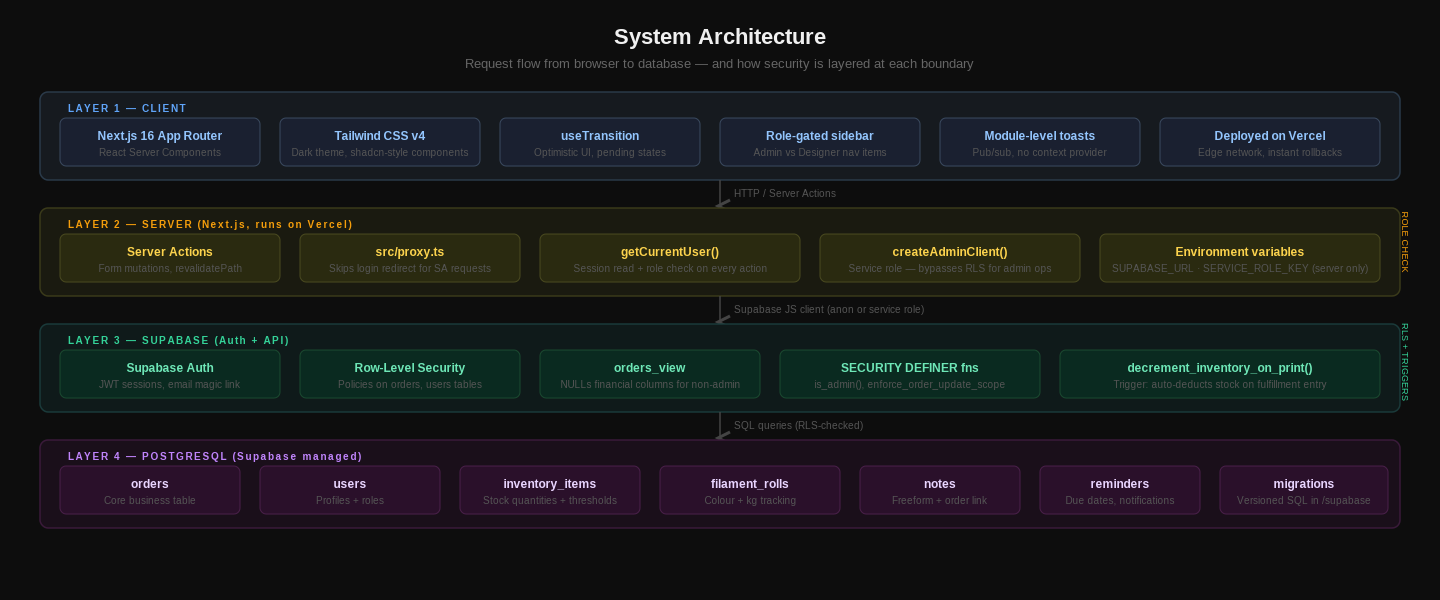
An order moves pending → in progress → model made → printed → shipped → delivered, with a revise branch back to the designer. Who may make each transition is not a UI concern: a Postgres trigger allows a designer exactly two of them and blocks the rest, so the rule holds whoever is calling and from wherever.
Stock that decrements itself, once
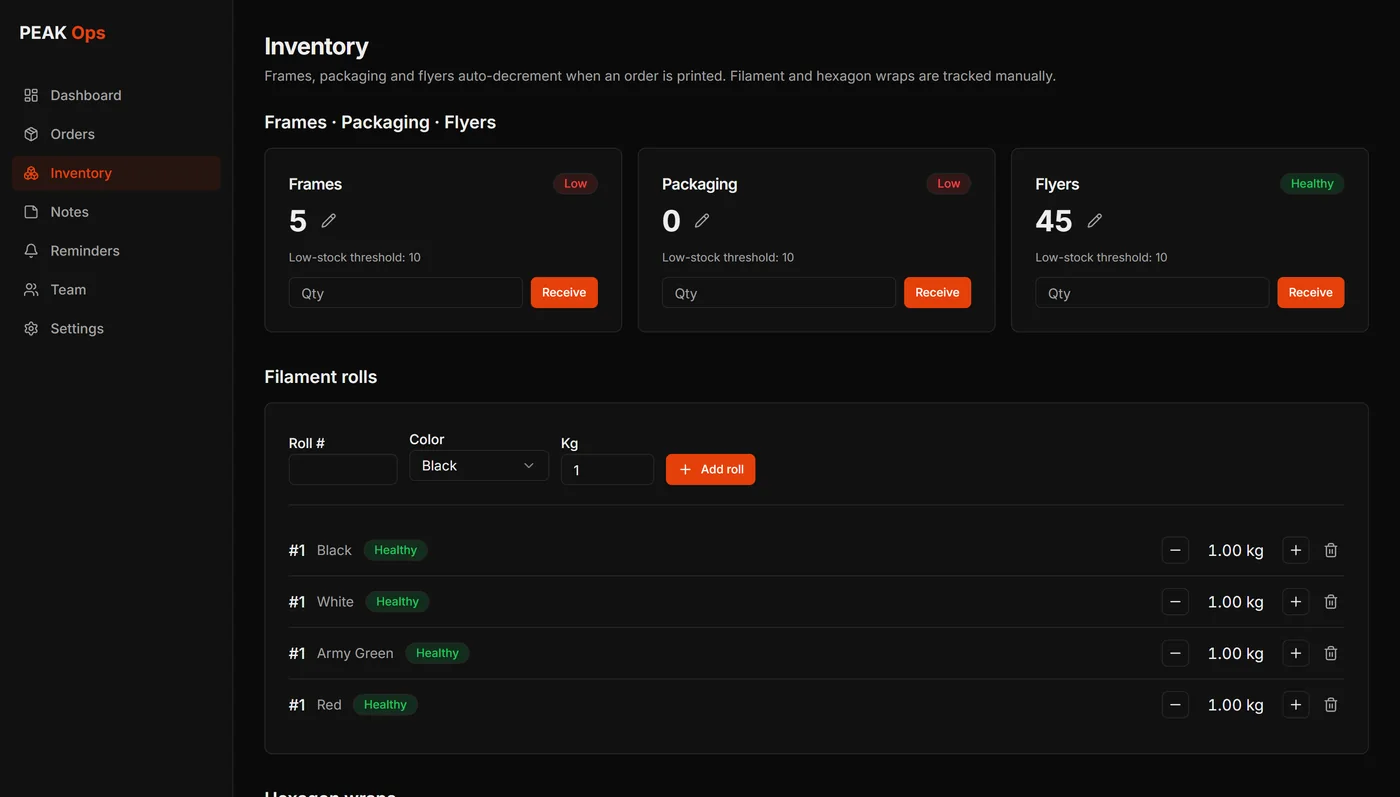
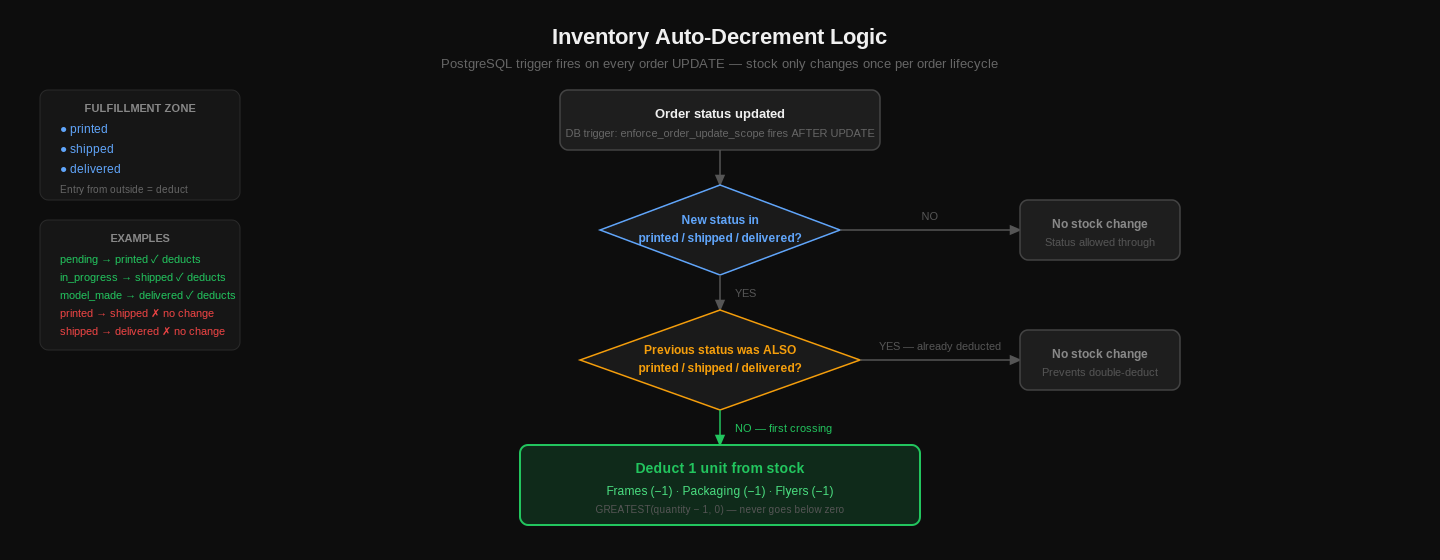
Crossing into fulfilment deducts a frame, a packaging unit and a flyer. The hard part is doing it exactly once, the same trigger checks whether the previous status was already in the fulfilment set and skips the deduction if so, so moving printed → shipped → delivered cannot double-charge the inventory. The subtraction floors at zero rather than going negative.
Two roles, one database
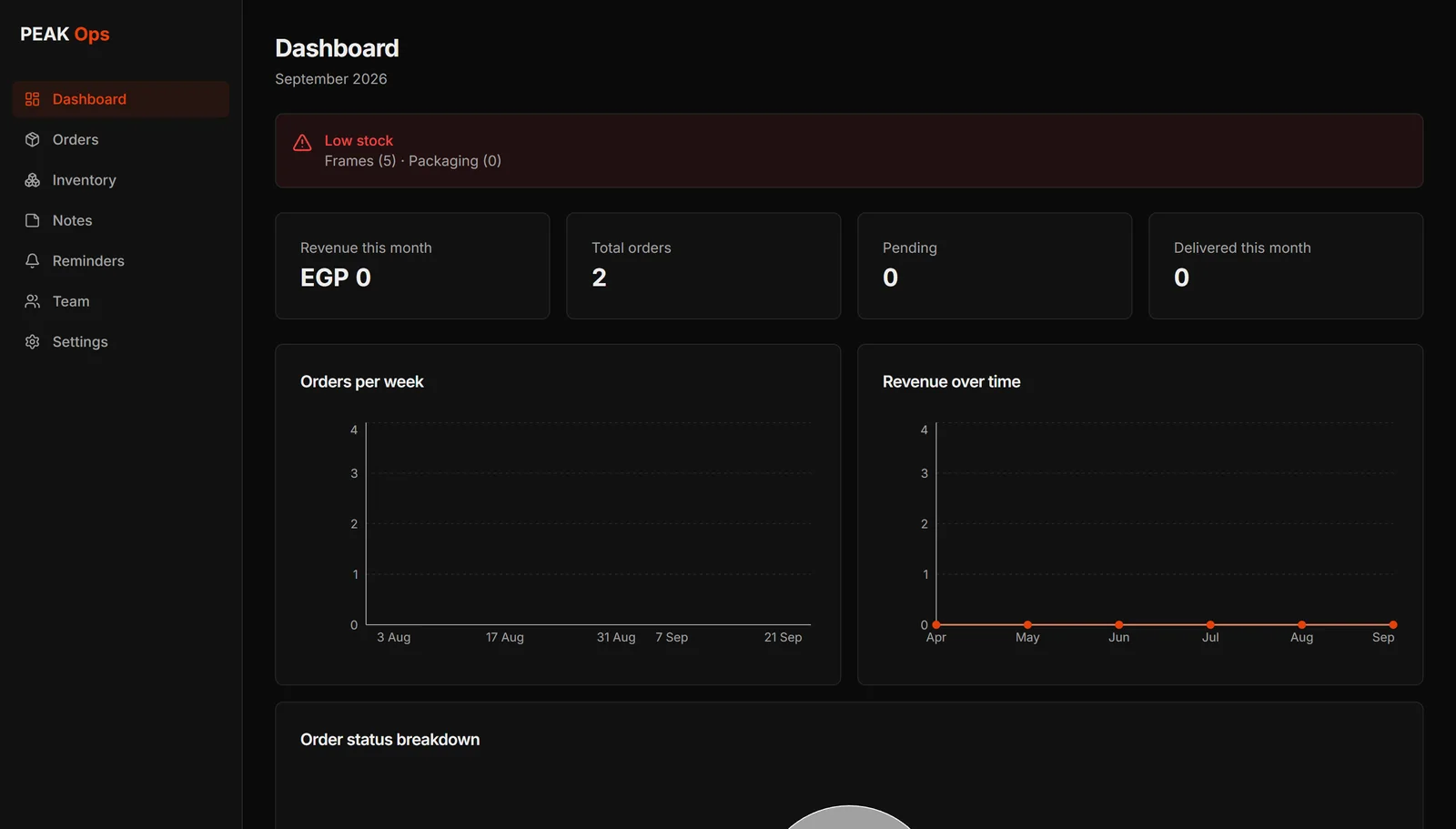
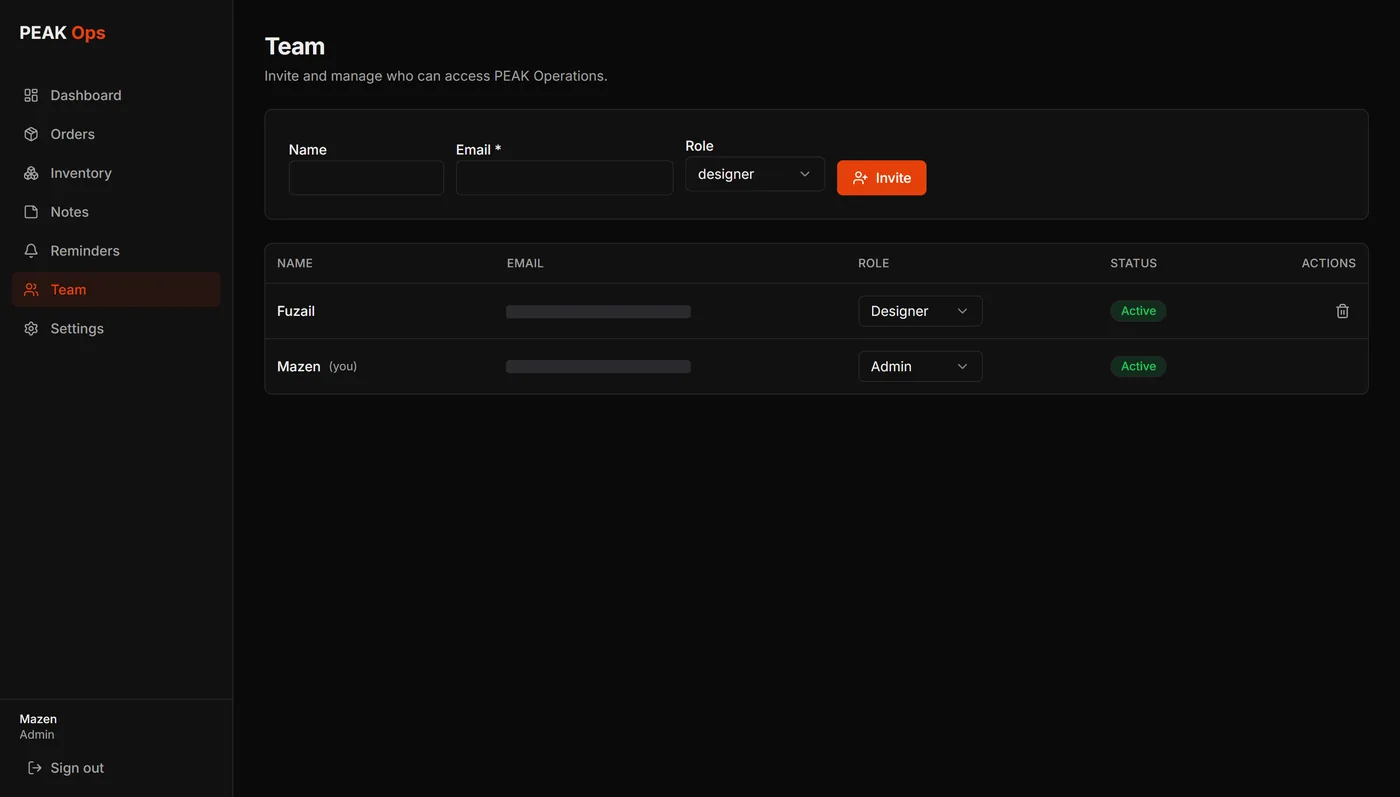
Admins see every row and every financial column. Designers see only orders assigned to them, with the money columns nulled out in the view itself, Row-Level Security does the filtering, so there is no client-side check to forget. The derived low-stock banner on the dashboard follows from the same data rather than from anyone remembering to update it.
Highlights
- Admin dashboard with a derived low-stock alert, four KPI tiles, orders per week, revenue over time and a status breakdown.
- Orders table carrying Strava and 3D model links, inline status, due / paid / balance and designer assignment on a single row.
- A Postgres trigger governs the status pipeline, designers get two transitions, admins get the rest.
- Inventory auto-decrements on the first crossing into fulfilment and never twice, flooring at zero.
- Row-Level Security filters designer rows and nulls the financial columns in the view, not in the client.
- Next.js App Router with React Server Components and Server Actions, deployed on Vercel.
Real data from an early-stage business: the revenue figures read zero because the app was captured before it had order history, not because the chart is a mock. The two email addresses on the team screen are redacted here.