Auromations Voice Receptionist
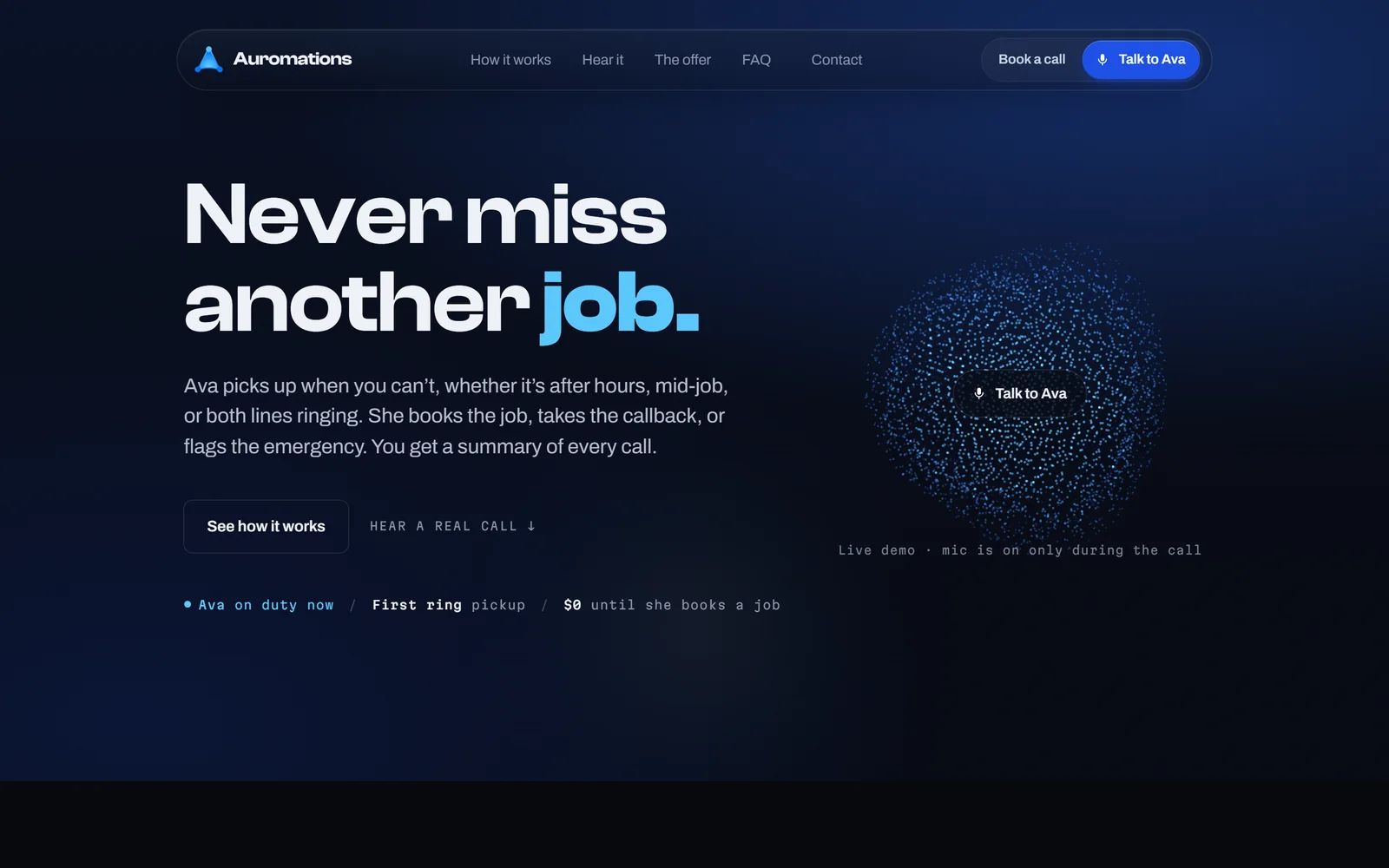
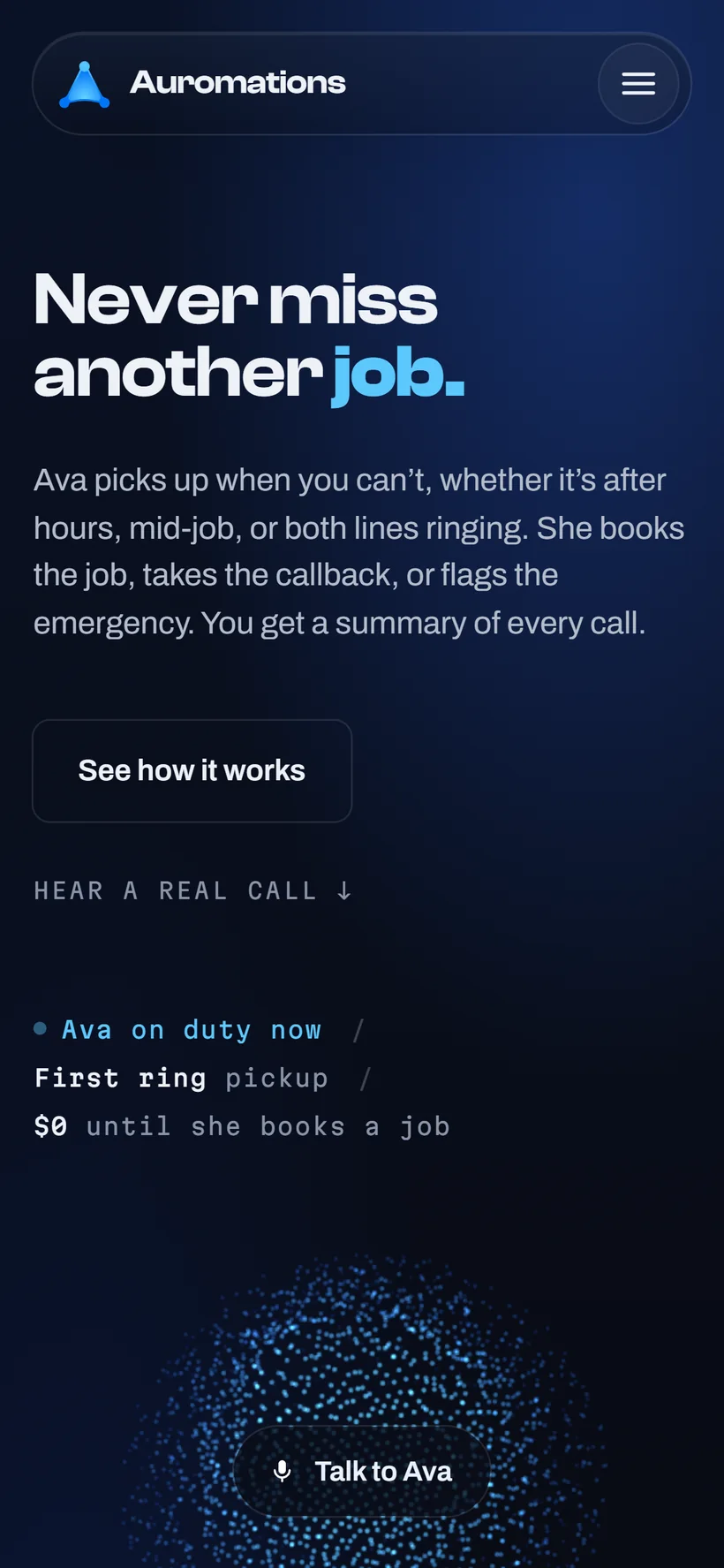
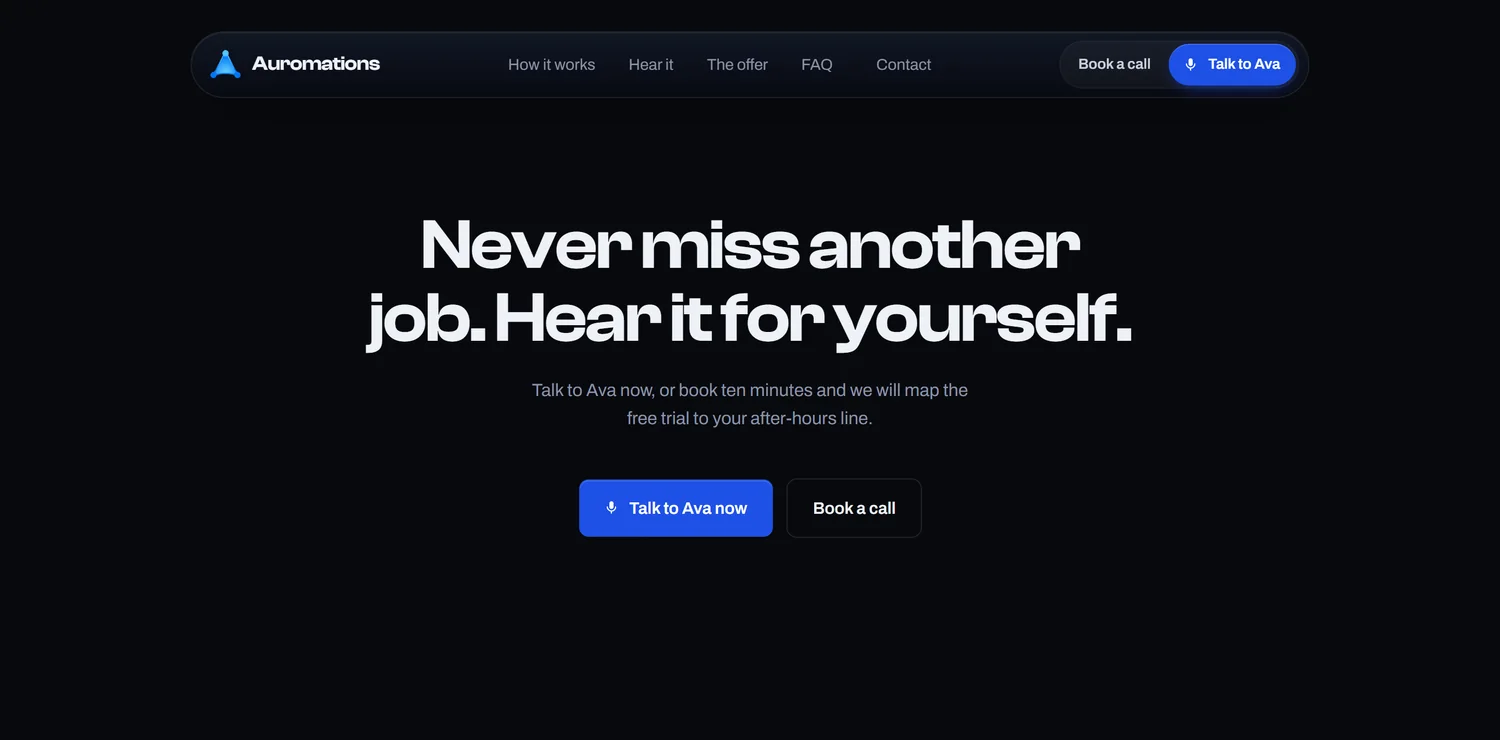
An AI receptionist for US home-service trades. Ava answers the calls an owner cannot take (after hours, mid-job, both lines ringing), qualifies the problem, checks live calendar availability and books the appointment herself through tool calls. The landing page is its own proof: you can talk to the same agent in the browser, or play a real recorded call with the transcript running beside it.
The call nobody answers
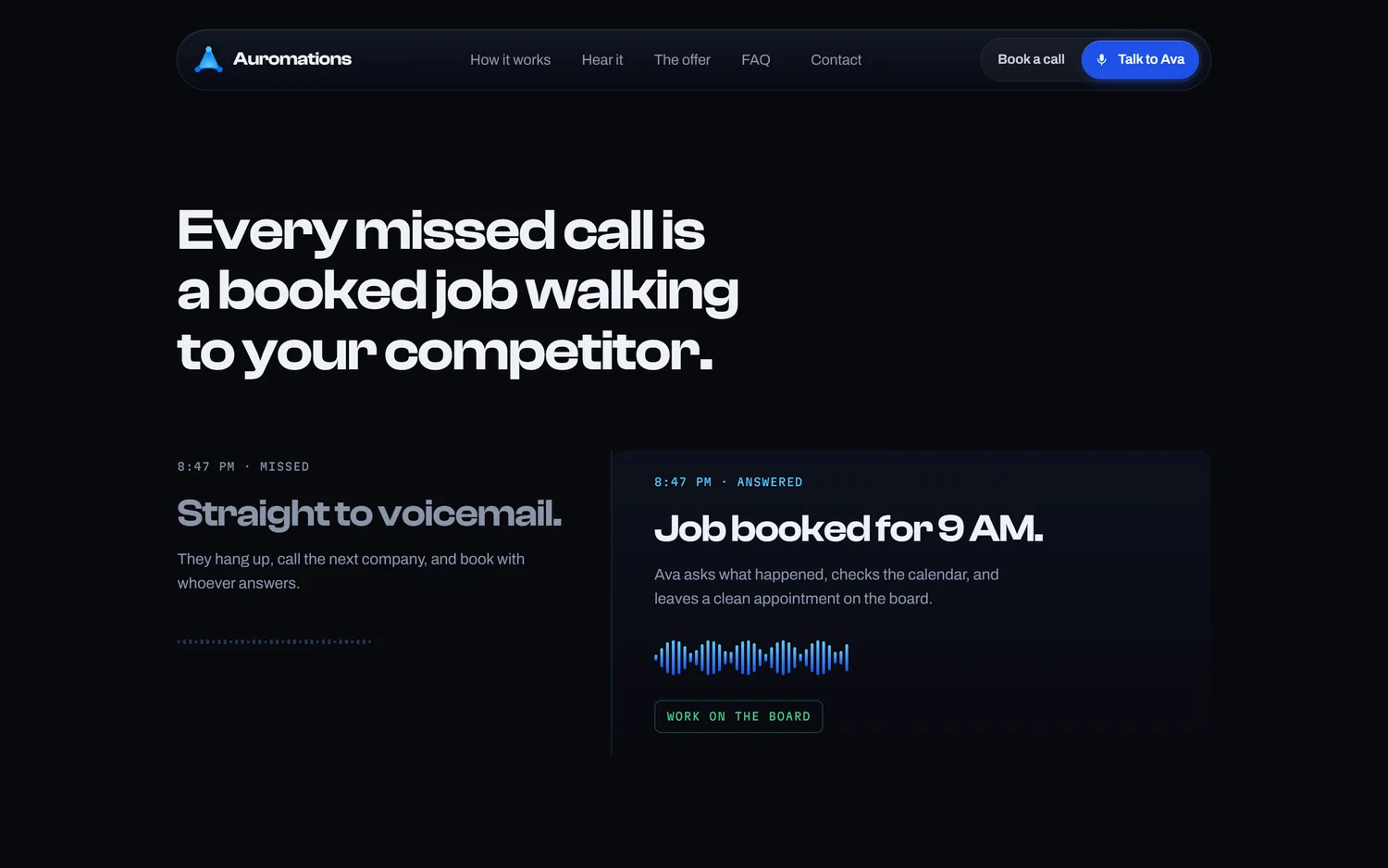
A missed call to a home-service business is not a missed call, it is a job that goes to whoever picks up next. The ones that get missed are the ones that matter most: eight in the evening, a weekend, or while the owner is already under someone's sink. Voicemail does not recover those, because a person whose AC has died at ninety-six degrees rings the next number on the list rather than leaving a message.
It books the job, it does not take a message
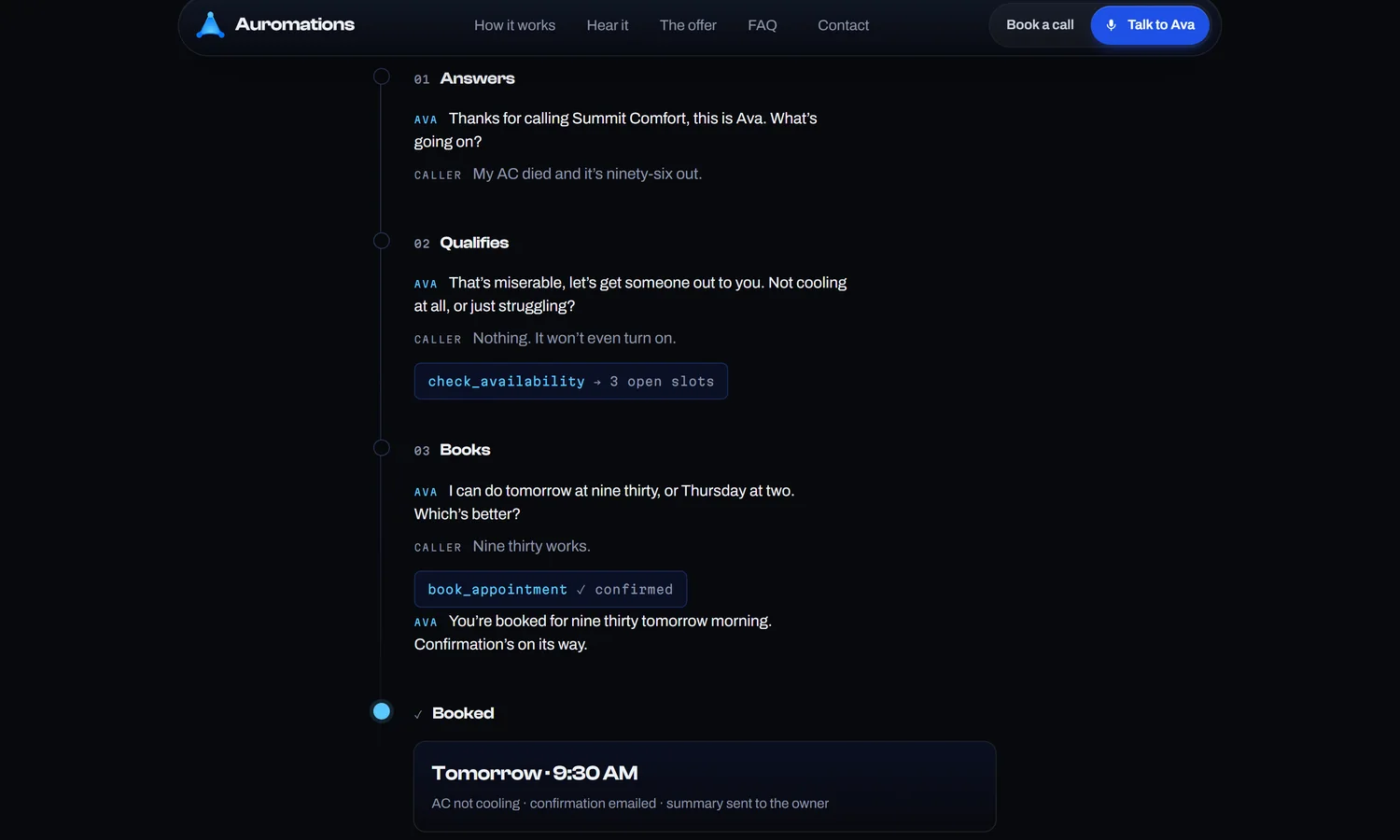
The distinction that makes this worth building is that Ava finishes the job rather than handing it back. She qualifies the fault, calls check_availability against the real calendar, offers the slots that actually exist, and then calls book_appointment to take one. The caller hangs up booked, the confirmation goes out, and the owner gets a summary of the call. An agent that only transcribes and emails is a slower voicemail.
The paths that are not the happy one
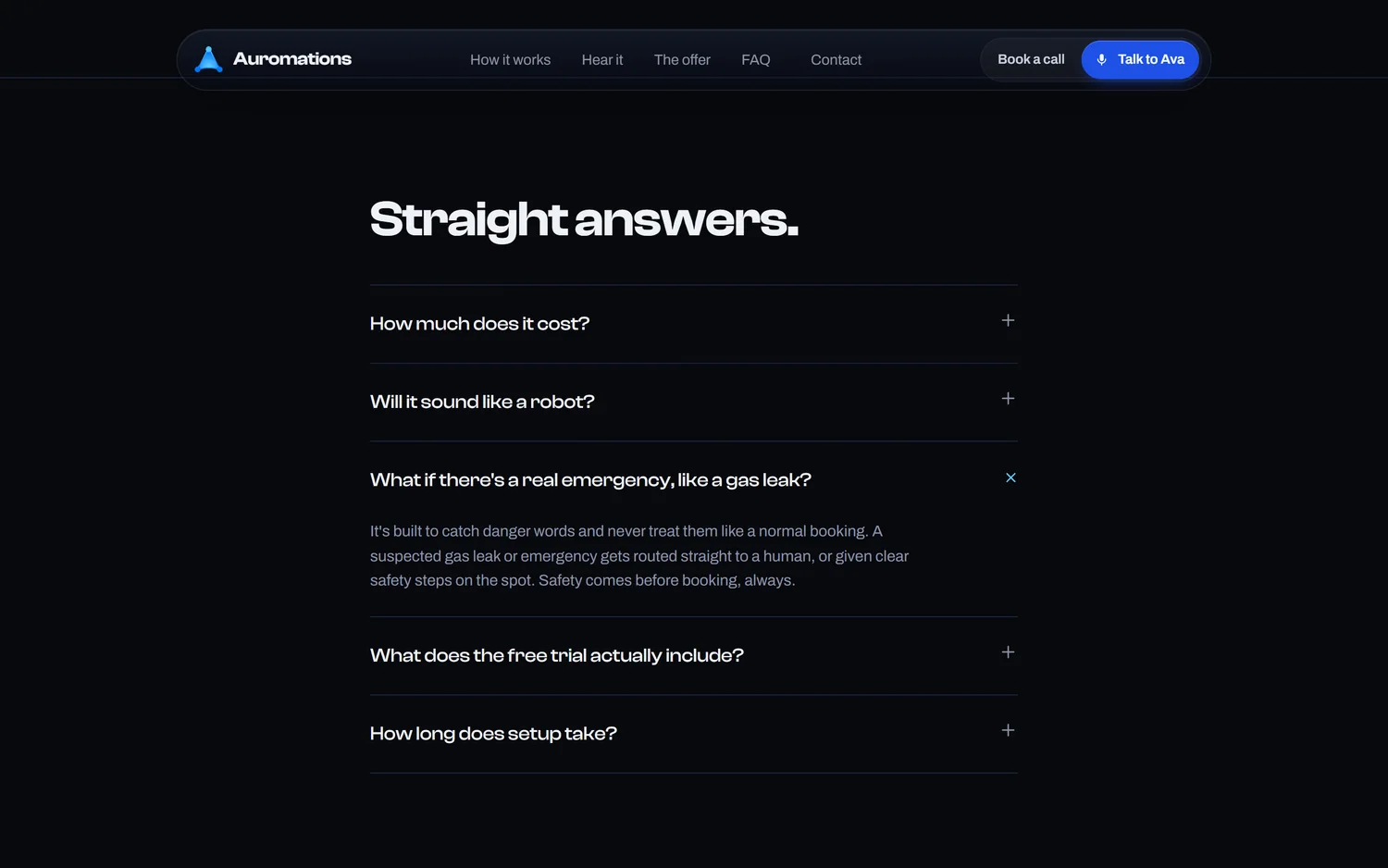
Two cases decide whether something like this can be trusted with a real phone line. If the calendar has nothing free, she takes a callback instead of inventing a slot, because a confidently wrong booking is worse than no booking. And if she hears danger words, a gas leak being the obvious one, she stops trying to book at all and routes the call to a human. Safety outranks the conversion every time, and the FAQ says so publicly rather than leaving it as an internal rule.
The page is the demo
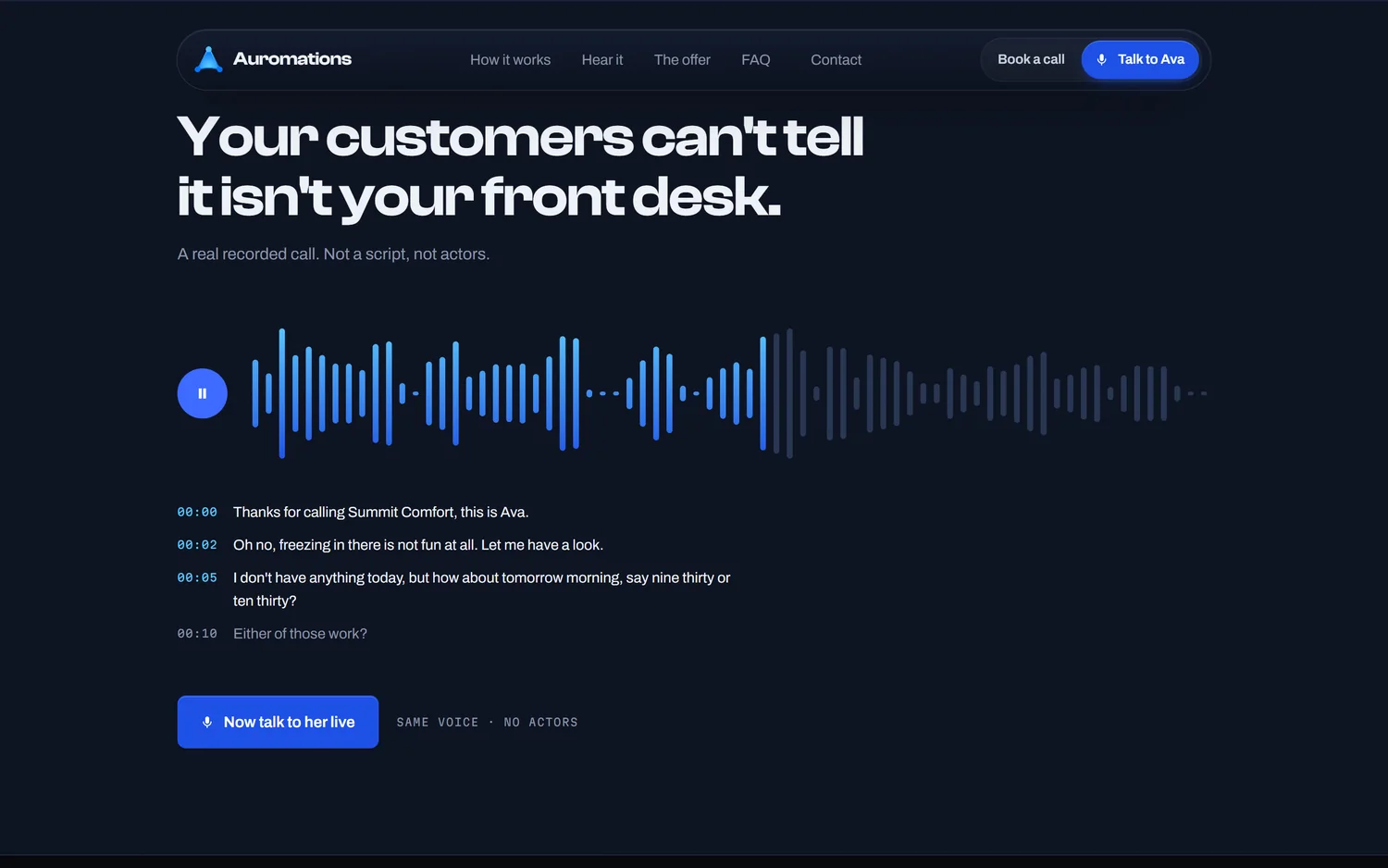
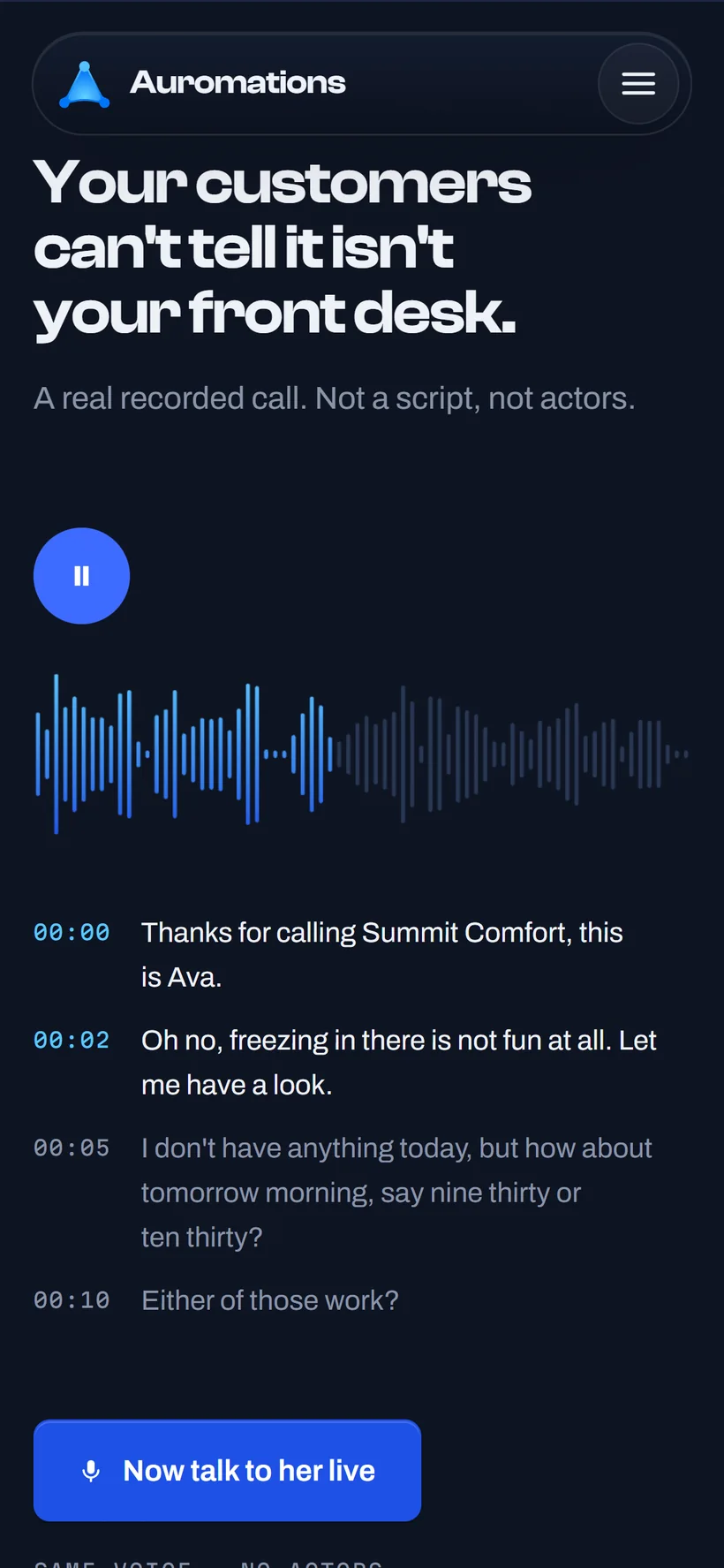
Selling an AI voice agent with a paragraph describing how natural it sounds is self-defeating. So the landing page hands you the evidence twice: the hero orb opens a live call to the same agent in the browser, and further down a real recorded call plays with its transcript highlighting line by line as it goes. Someone deciding whether this is worth a phone number can hear the answer in about thirty seconds without talking to anyone.
Priced like a stranger asking for your phone line
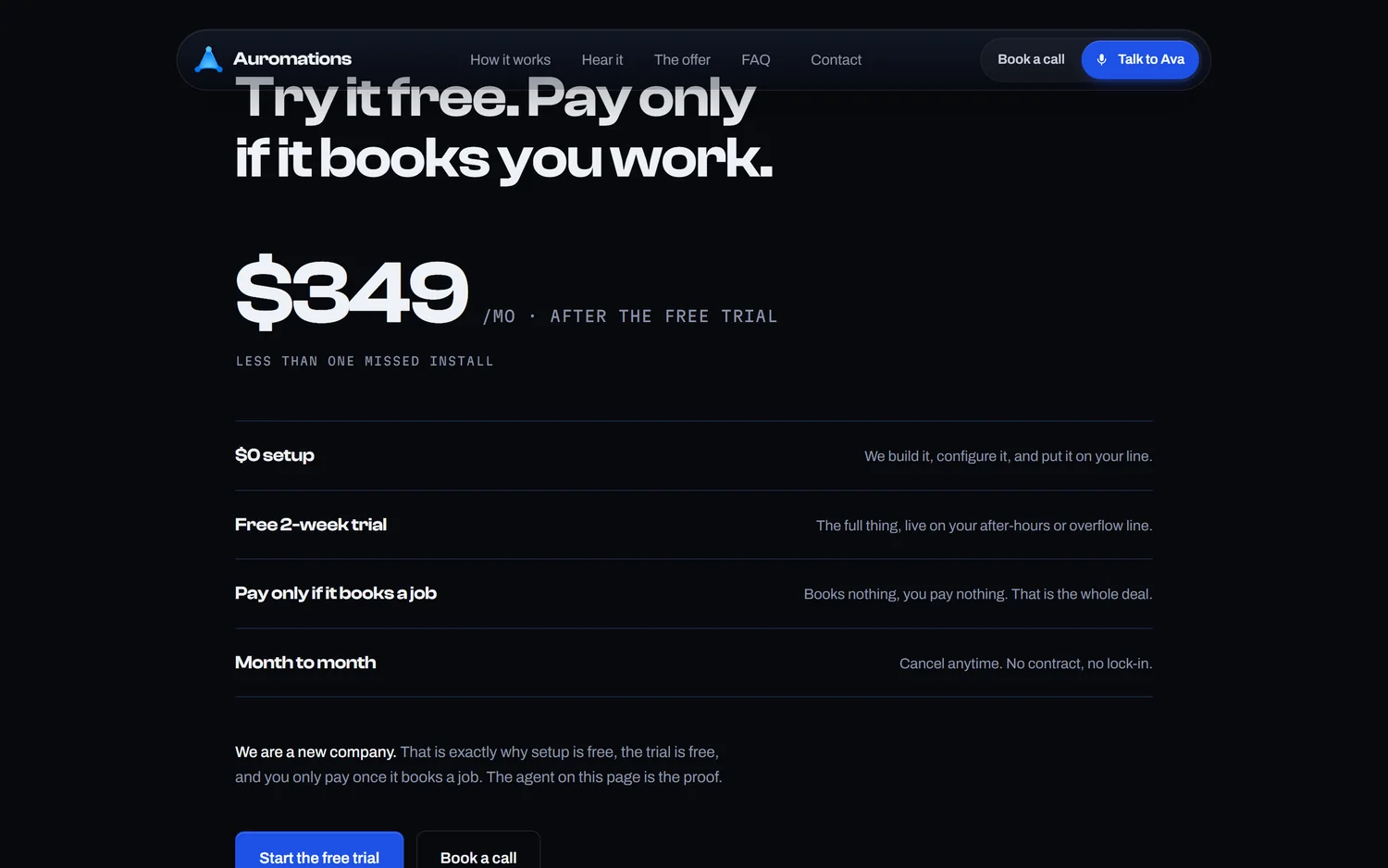
Auromations is new and has no reputation to trade on, so the offer carries the risk instead of the customer: nothing to set up, a free two-week trial, and the monthly fee only starts once the agent has actually booked a job. That is a go-to-market decision as much as a product one, and it is the honest answer to the question a trade business would reasonably ask first.
Highlights
- Books the appointment itself through check_availability and book_appointment rather than taking a message.
- No free slot means a callback, not an invented one.
- Danger words such as a gas leak escalate to a human instead of being booked.
- The owner gets a summary of every call.
- The landing page is the proof: a live in-browser call, plus a real recording with a synced transcript.
- Nothing to set up, two weeks free, and paid only once it has booked a job.
The call shown in the timeline and the recording is a demo business, not a customer, and the figures on the page are the published offer rather than results. Auromations is new and claims no client outcomes. The closing shot is cropped at the footer rule, which carries a business phone number and a street address.