Game of Life
Conway's Game of Life built as something you play rather than something you watch. A puzzle mode with goals and a countdown, a creative sandbox for the classic patterns, and a randomiser, written in C++ with SFML and TGUI.
Turning a simulation into a game
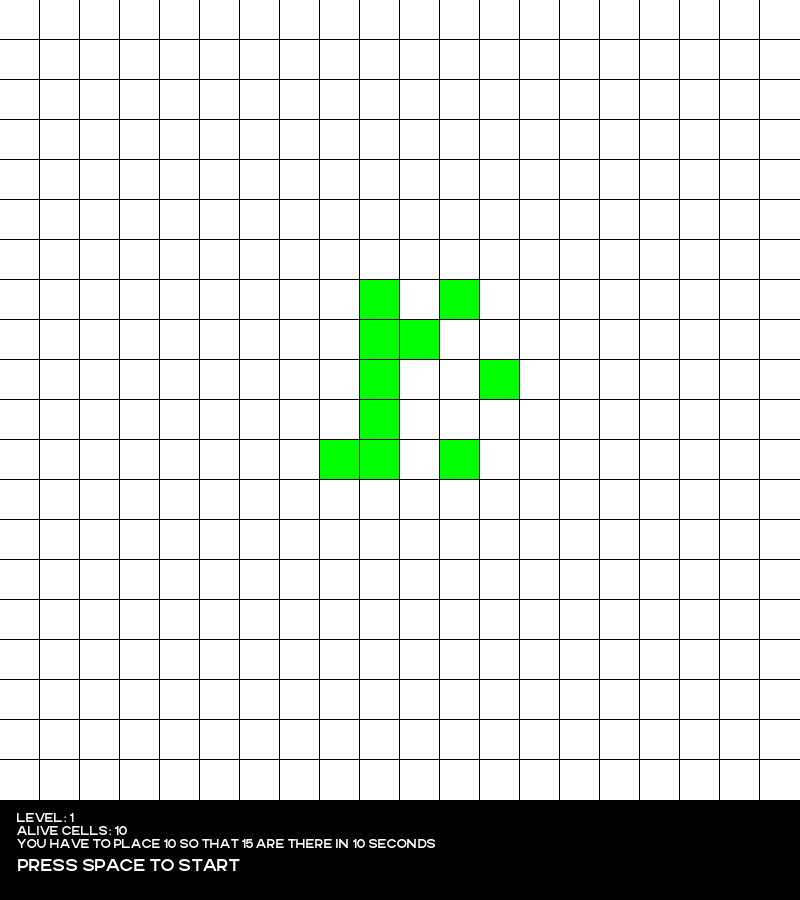
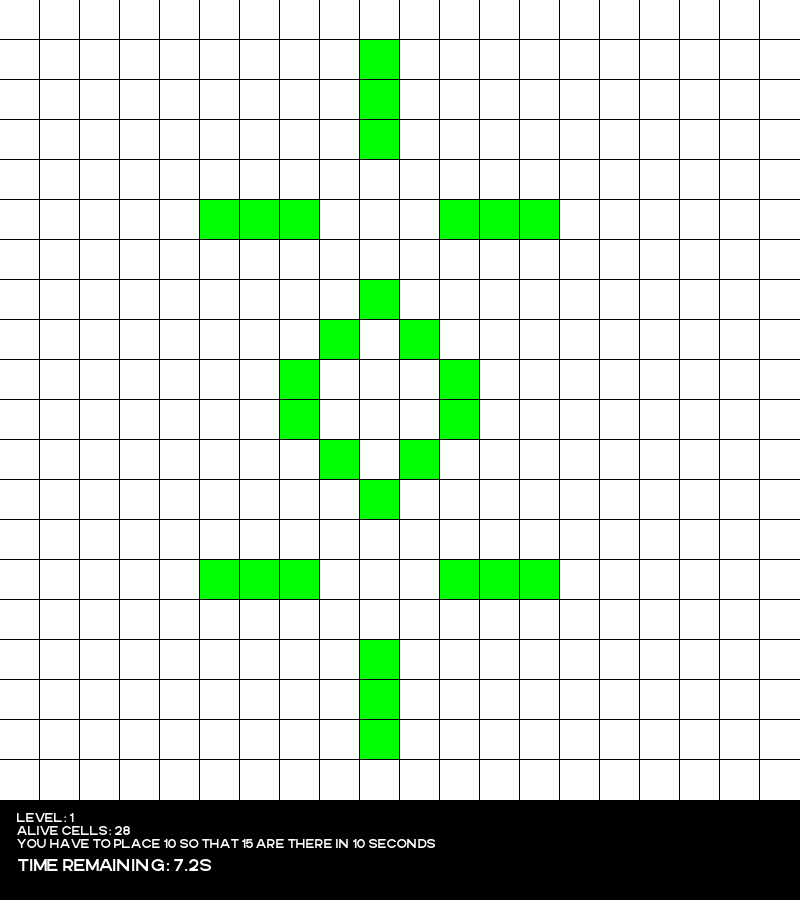
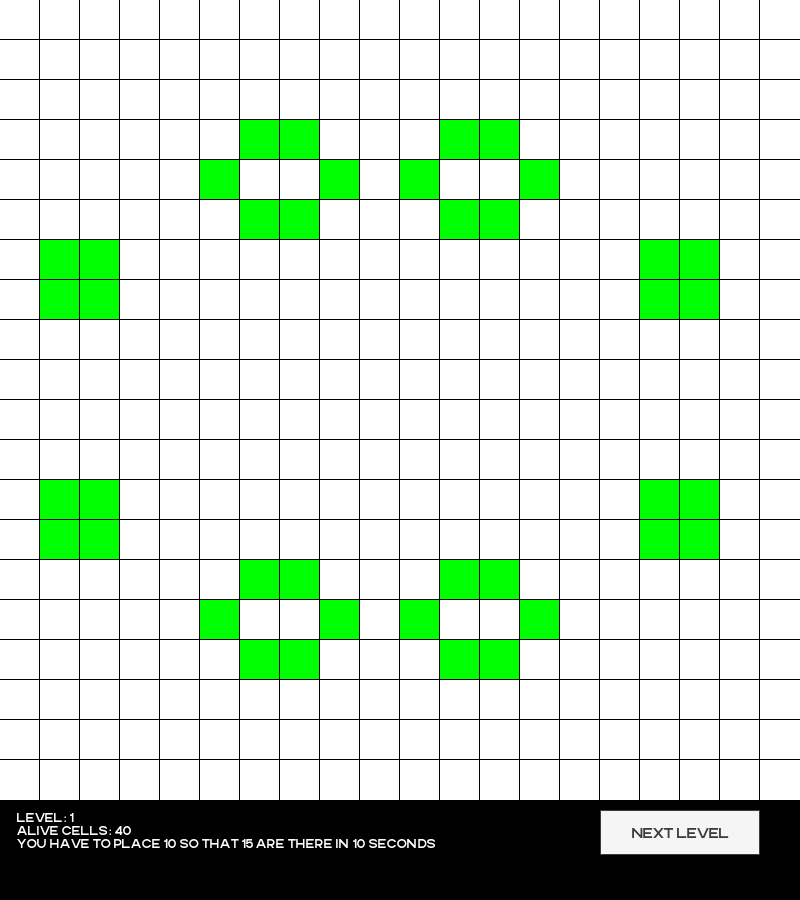
Life is usually a toy you start and stare at. The interesting move was giving it a win condition: Levels mode asks you to place a fixed number of cells so that a target number are still alive when a countdown ends. That turns an automaton into a puzzle, because you have to reason forward about what a seed will grow into.
Three ways in
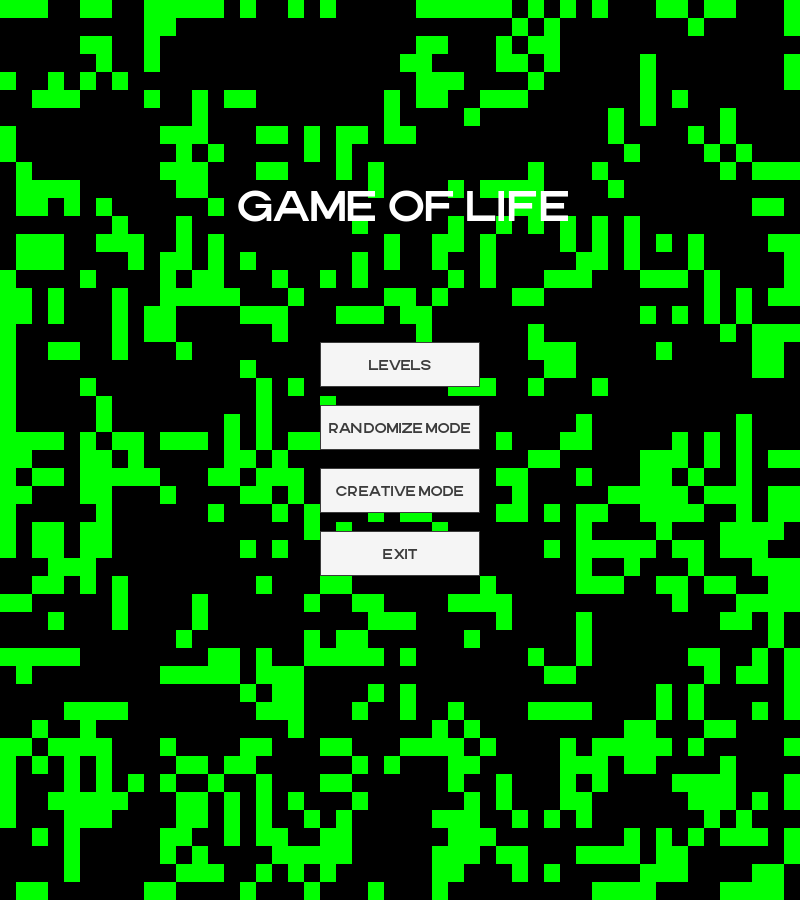
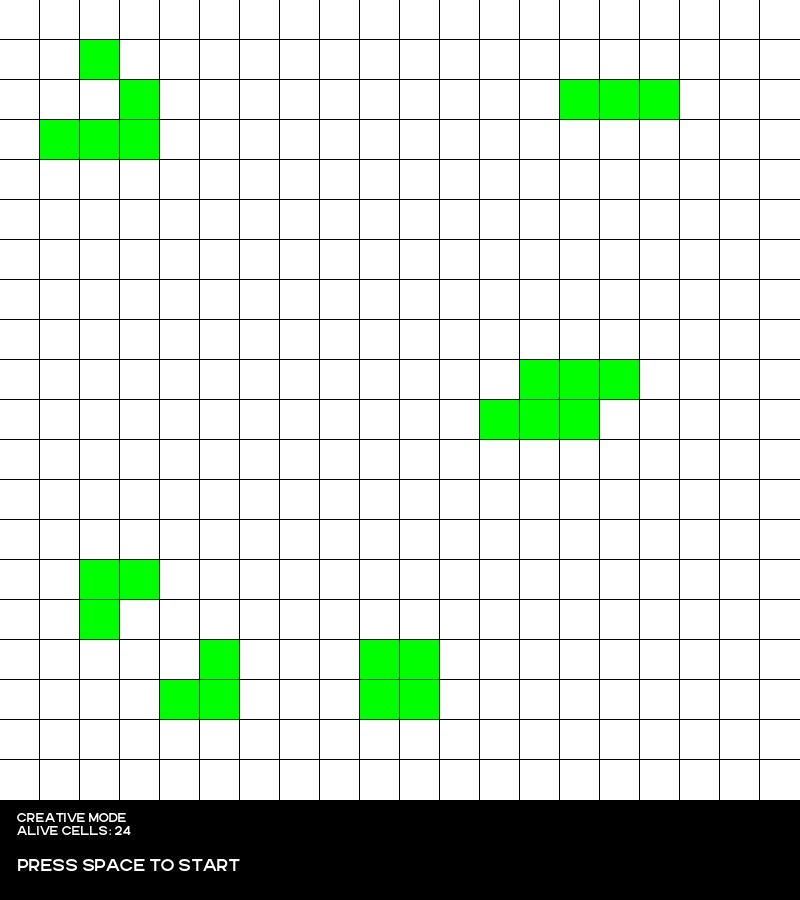
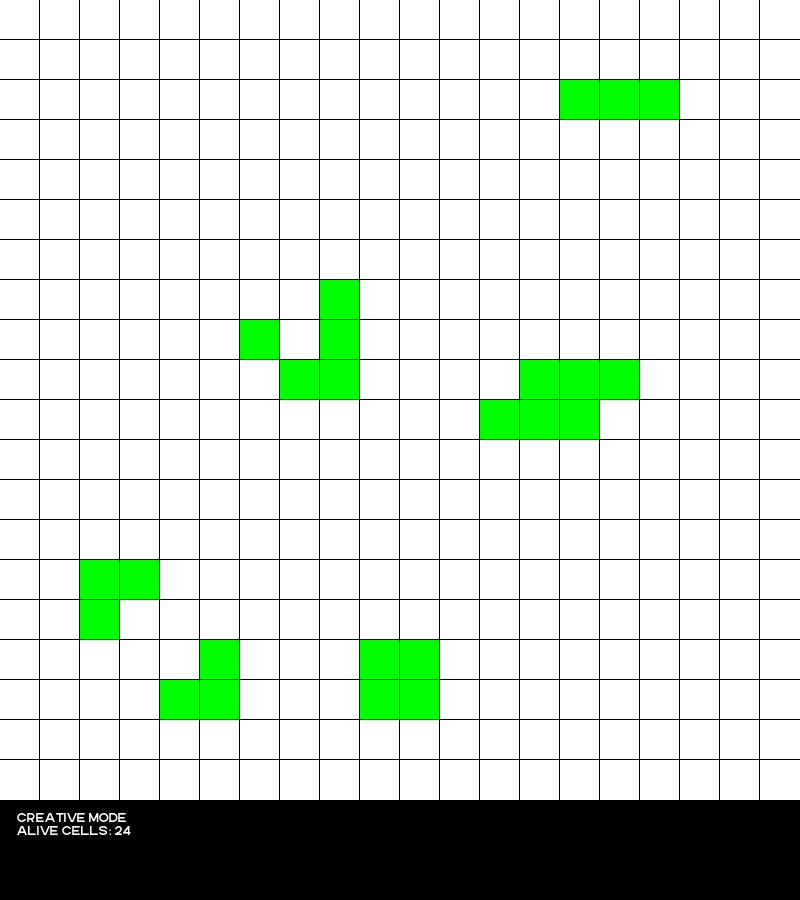
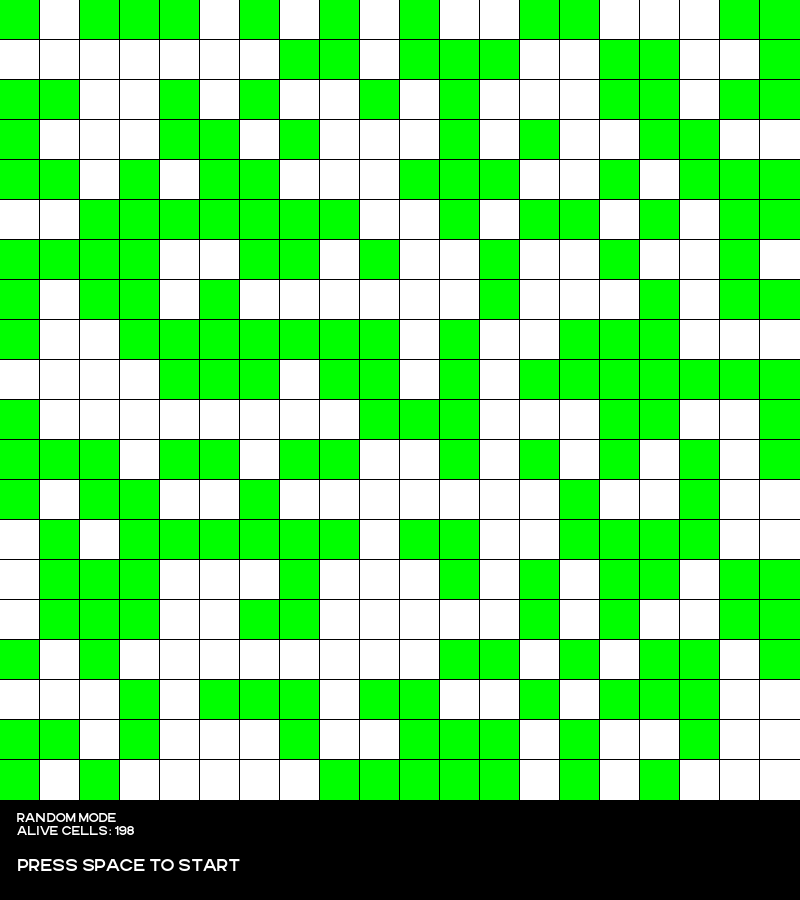
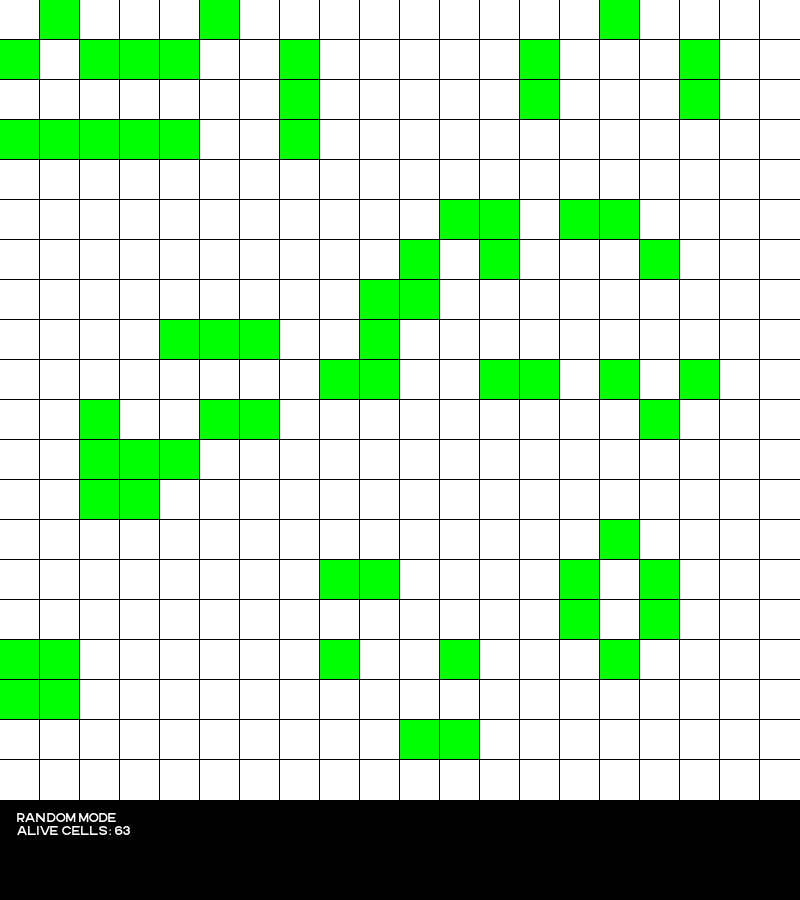
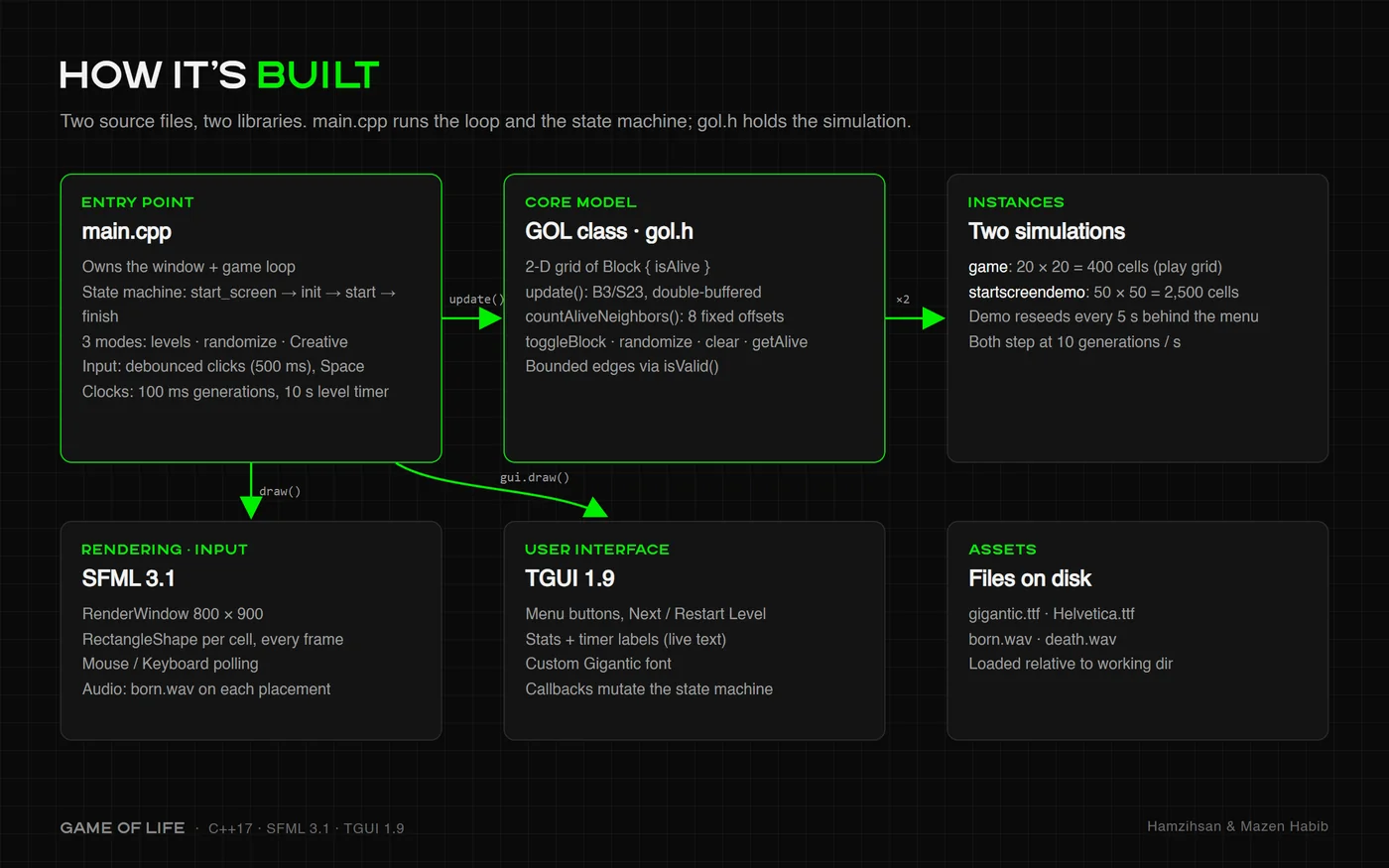
Levels is the puzzle. Creative is a sandbox for placing the classic patterns (glider, blinker, toad, beacon, block) and watching each behave. Randomize fills the board and lets it settle, which is the fastest way to see still lifes and oscillators emerge out of noise. The title screen runs a live 50 × 50 simulation behind the menu.
Under it
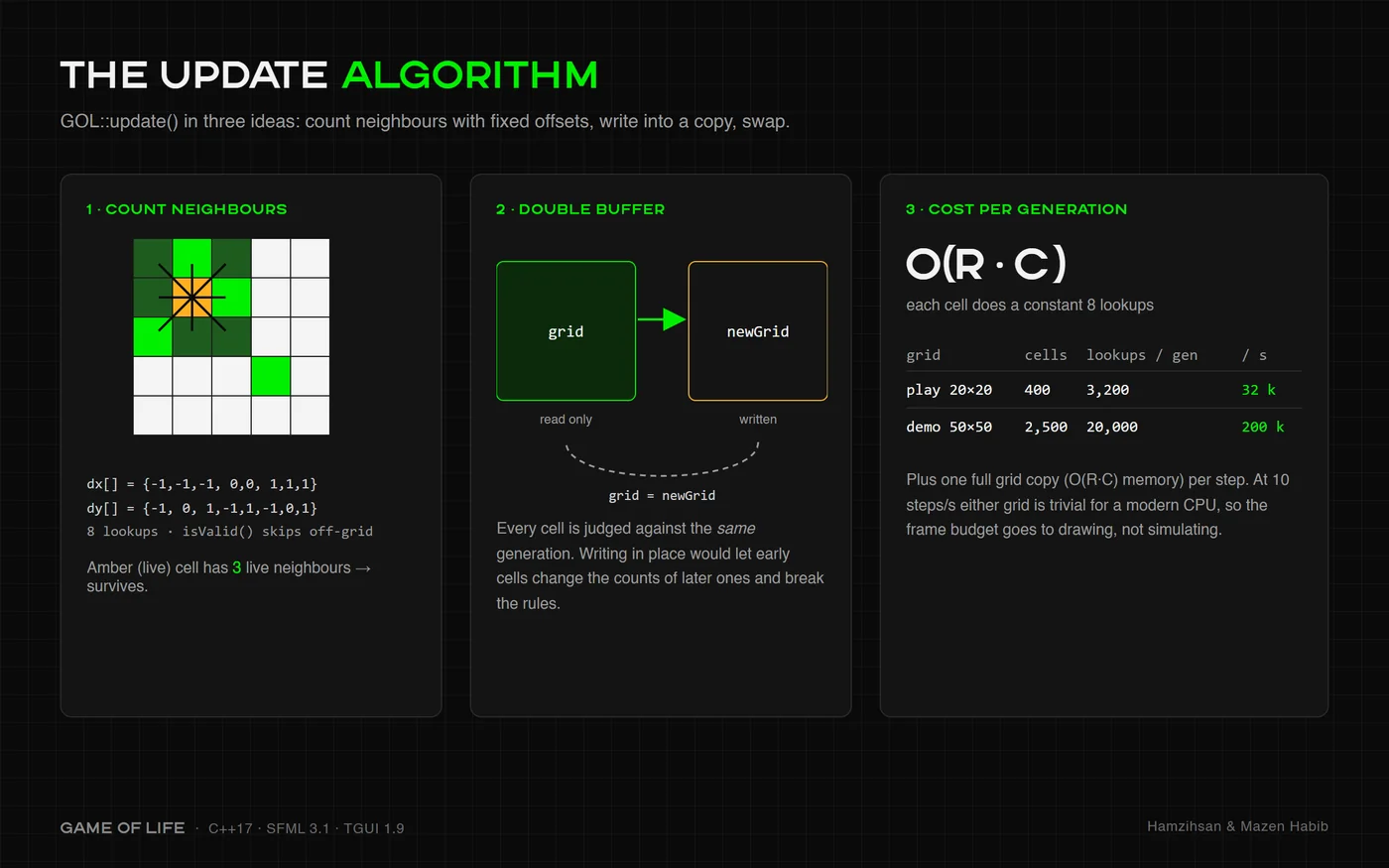
A fixed-timestep frame loop drives the grid so simulation speed stays independent of frame rate, with SFML 3.1 handling rendering and TGUI 1.9 the interface. The update step evaluates each cell's eight neighbours into a new buffer rather than mutating in place, which is the difference between Life and something that merely looks like it.
Highlights
- Levels mode turns the simulation into a puzzle: place a fixed number of cells so a target number survive the countdown.
- Creative mode is a sandbox for the classic patterns, glider, blinker, toad, beacon and block.
- Randomize fills the board and lets it settle into still lifes and oscillators.
- A fixed-timestep frame loop keeps simulation speed independent of frame rate.
- The title screen runs a live 50 × 50 simulation behind the menu.
The Level 1 seed shown here was found by a small search script to guarantee a clear, not designed by hand.