EcoSort: Waste Classification
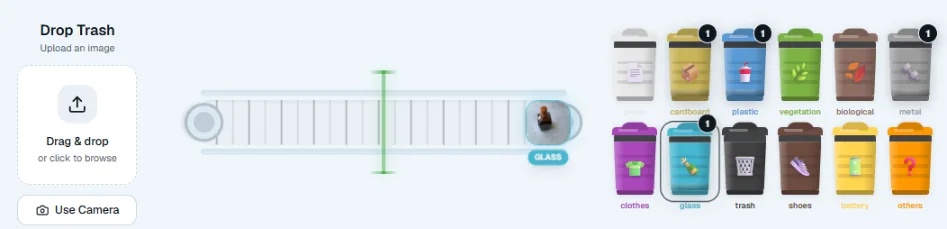
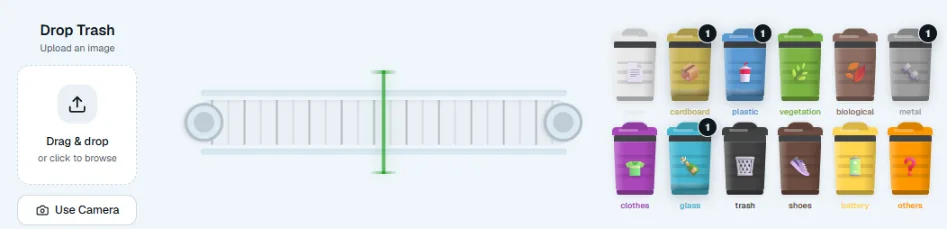
A waste-sorting system with the model doing the deciding: an item travels down a conveyor, a YOLOv11n model classifies it across twelve categories, and it drops into the matching bin. Built as a running, documented application rather than a notebook.


The idea
Recycling fails at the sorting step, and sorting is a classification problem with a physical outcome. EcoSort makes that loop visible: an item moves along a conveyor, the model labels it, and the corresponding bin lights up as the item drops in. The classification is not a number in a console, it is the thing that decides where the object goes.
The model
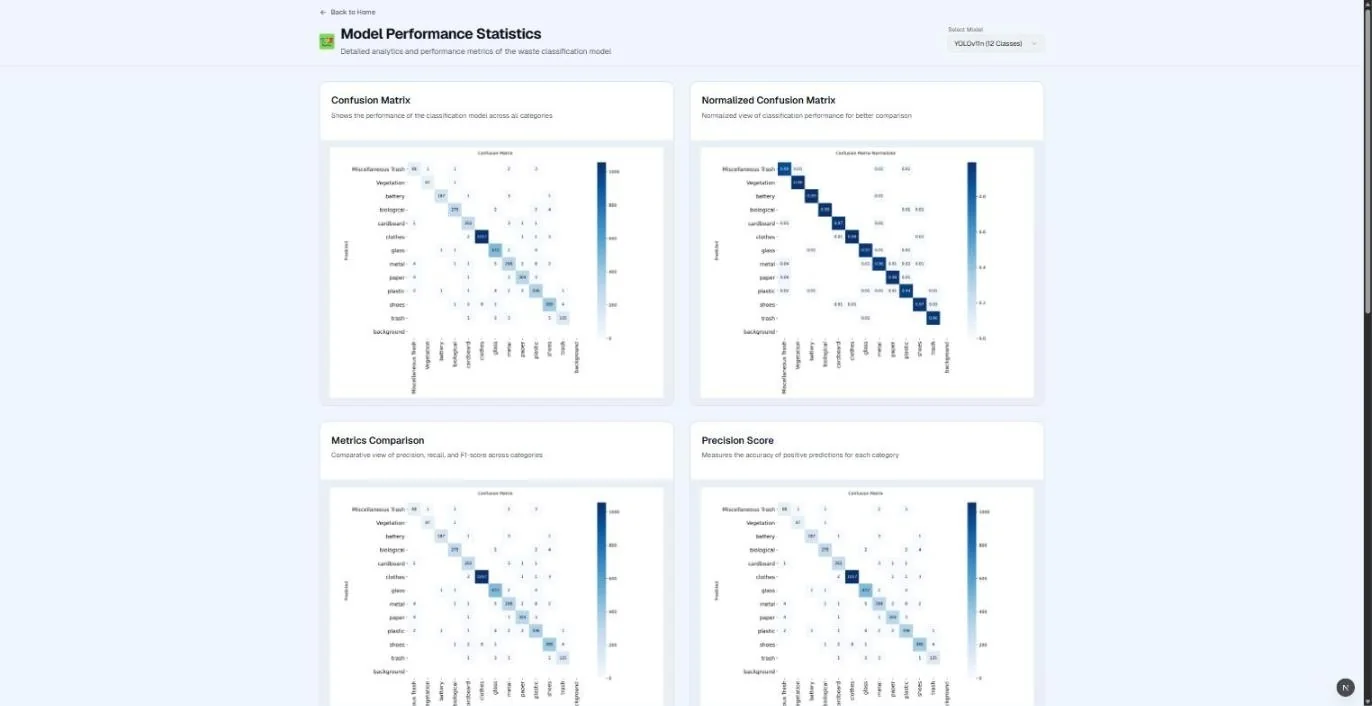
A YOLOv11n model across twelve waste categories, chosen for being small enough to run responsively behind a web app. The stats page shows both the raw and normalized confusion matrices, with the diagonal running between 0.89 and 0.99, and the off-diagonal cells left visible, because where a waste classifier confuses classes matters more than its headline accuracy.
Built to be run by someone else
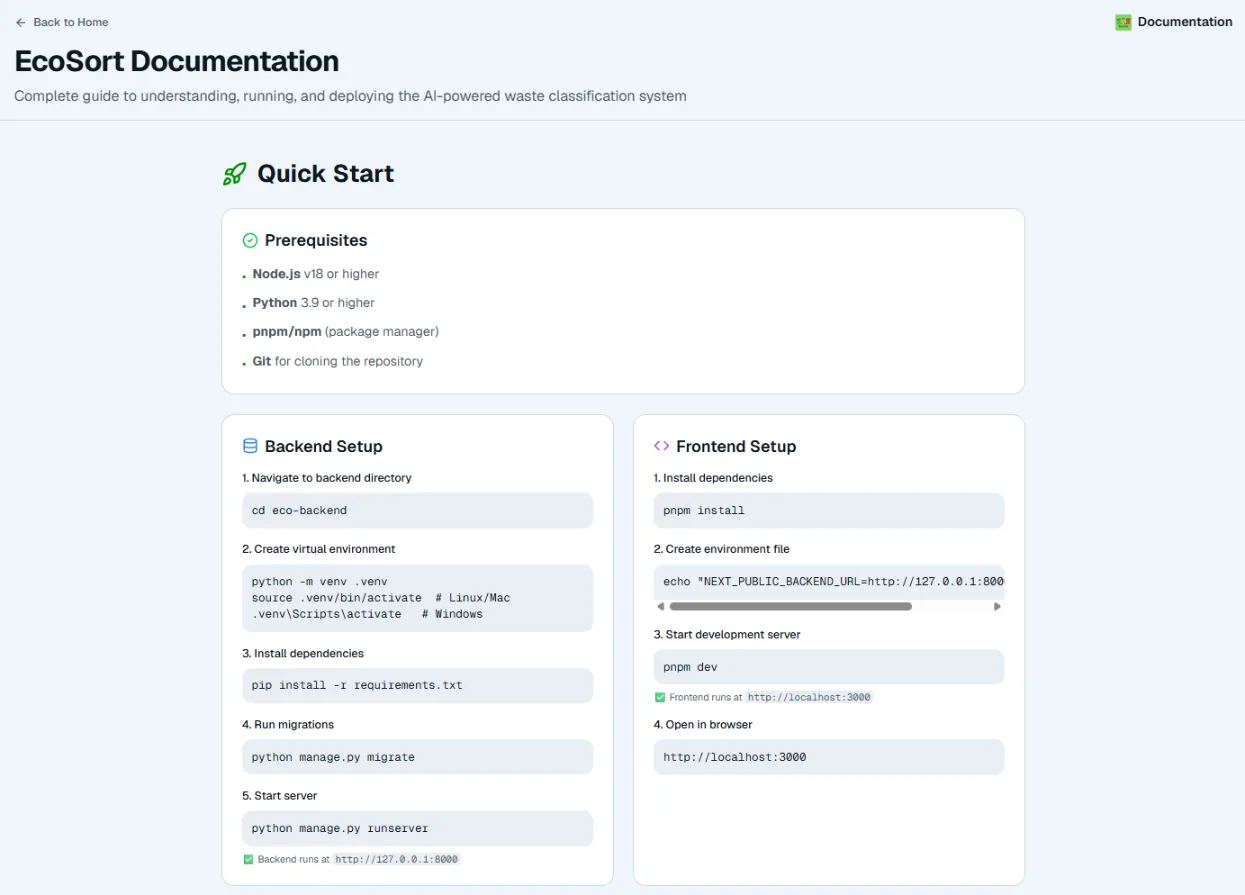
A Next.js front end talks to a Django backend that holds the model and the per-bin counts. It ships with its own documentation page covering prerequisites and setup for both halves, so the project can be cloned and run rather than just looked at.
Highlights
- Twelve-class YOLOv11n model, the normalized confusion matrix runs 0.89 to 0.99 down the diagonal.
- Classification drives a physical outcome: the matching bin highlights as the item drops in.
- Next.js front end against a Django backend, keeping sorted counts per bin.
- Ships with its own documentation page covering prerequisites and setup, so someone else can actually run it.
The mark on the opening card is one I designed for this write-up. The project had no identity of its own, and a conveyor screenshot makes a poor thumbnail. The demo items are sample photos from the project's own dataset, which is also the model's training and evaluation data. That is why confidence reads so high, it is not a held-out accuracy claim.