Employee Management System
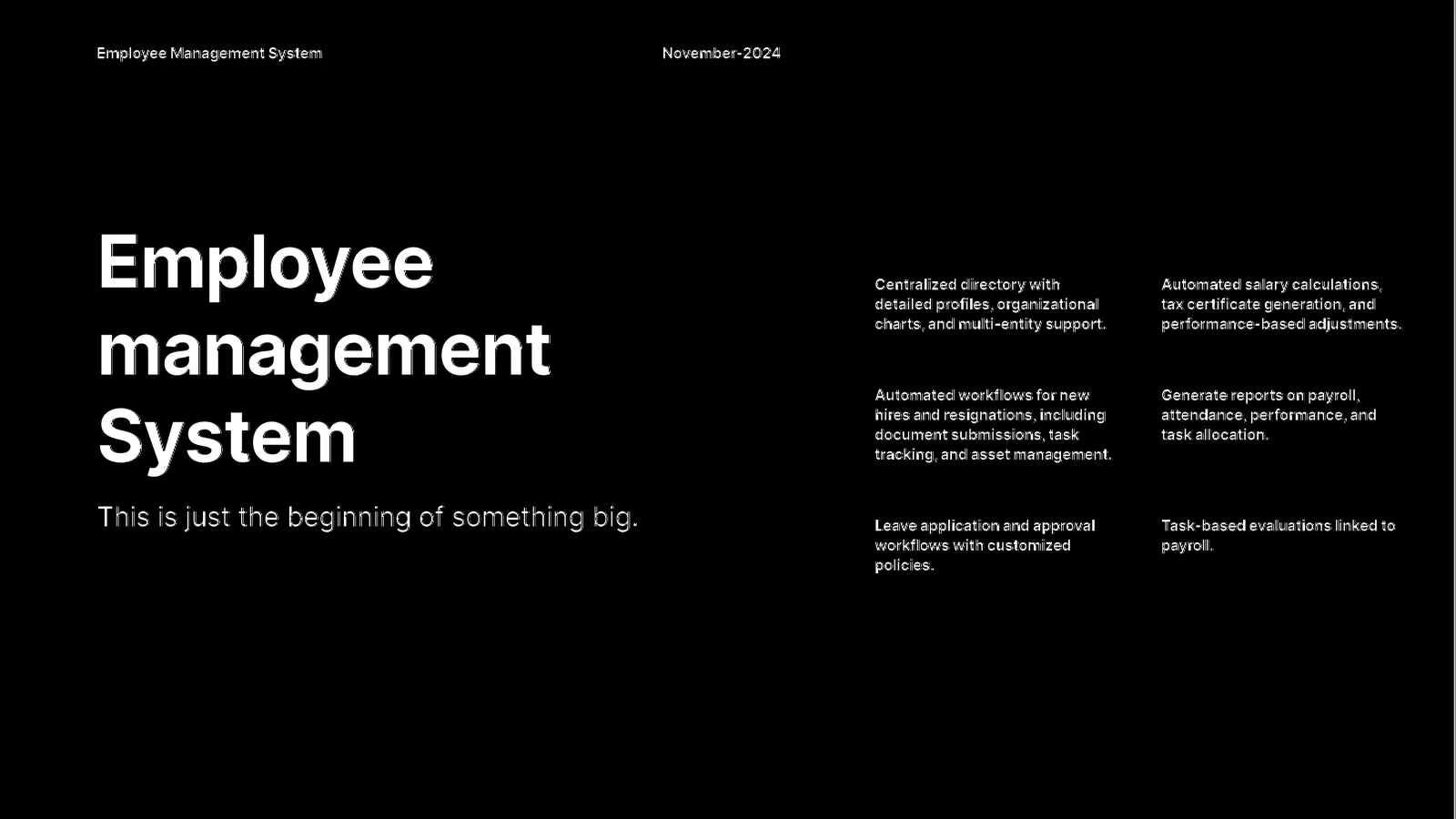
Interface design for an employee management system covering the whole lifecycle, directory and profiles, onboarding and resignation workflows, leave, attendance, piece-rate and salaried payroll, and performance review.
The brief
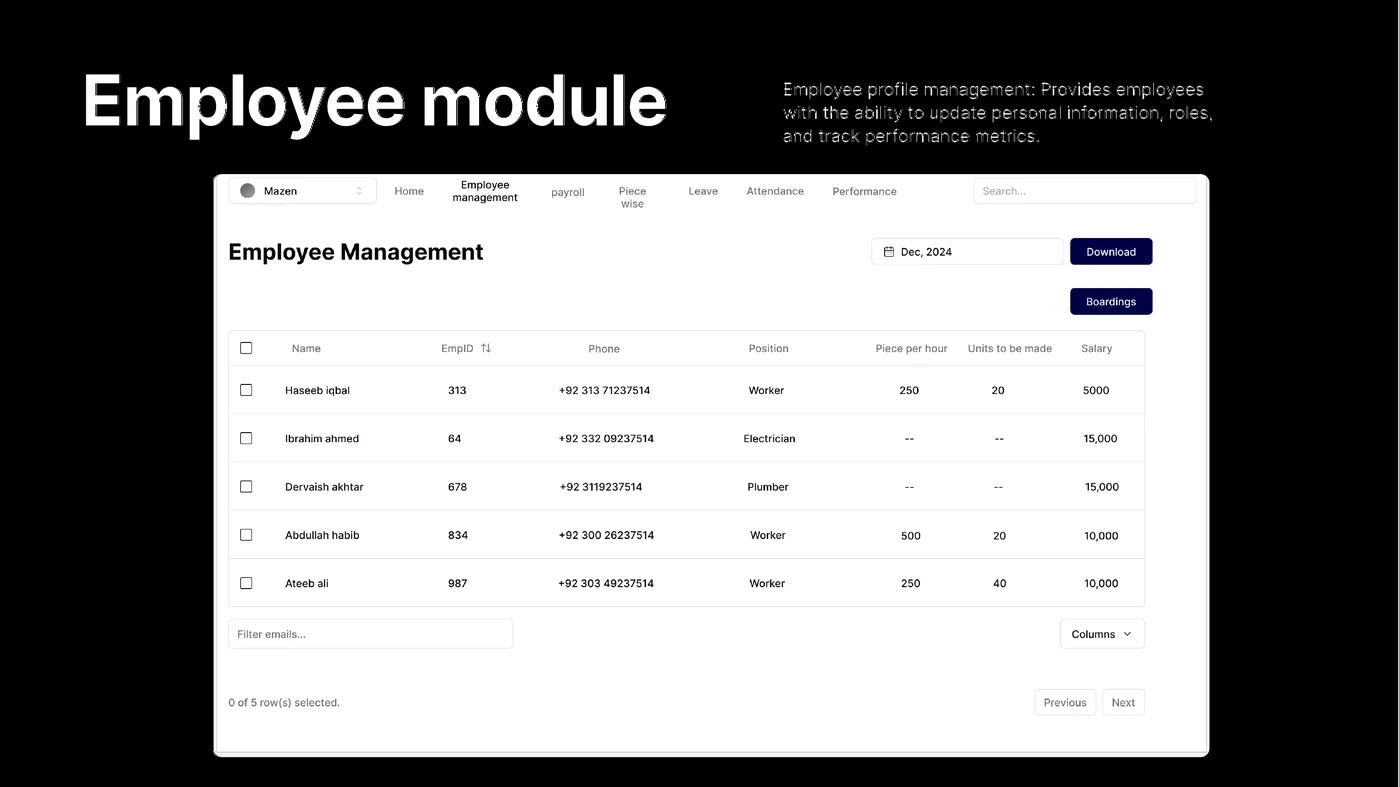
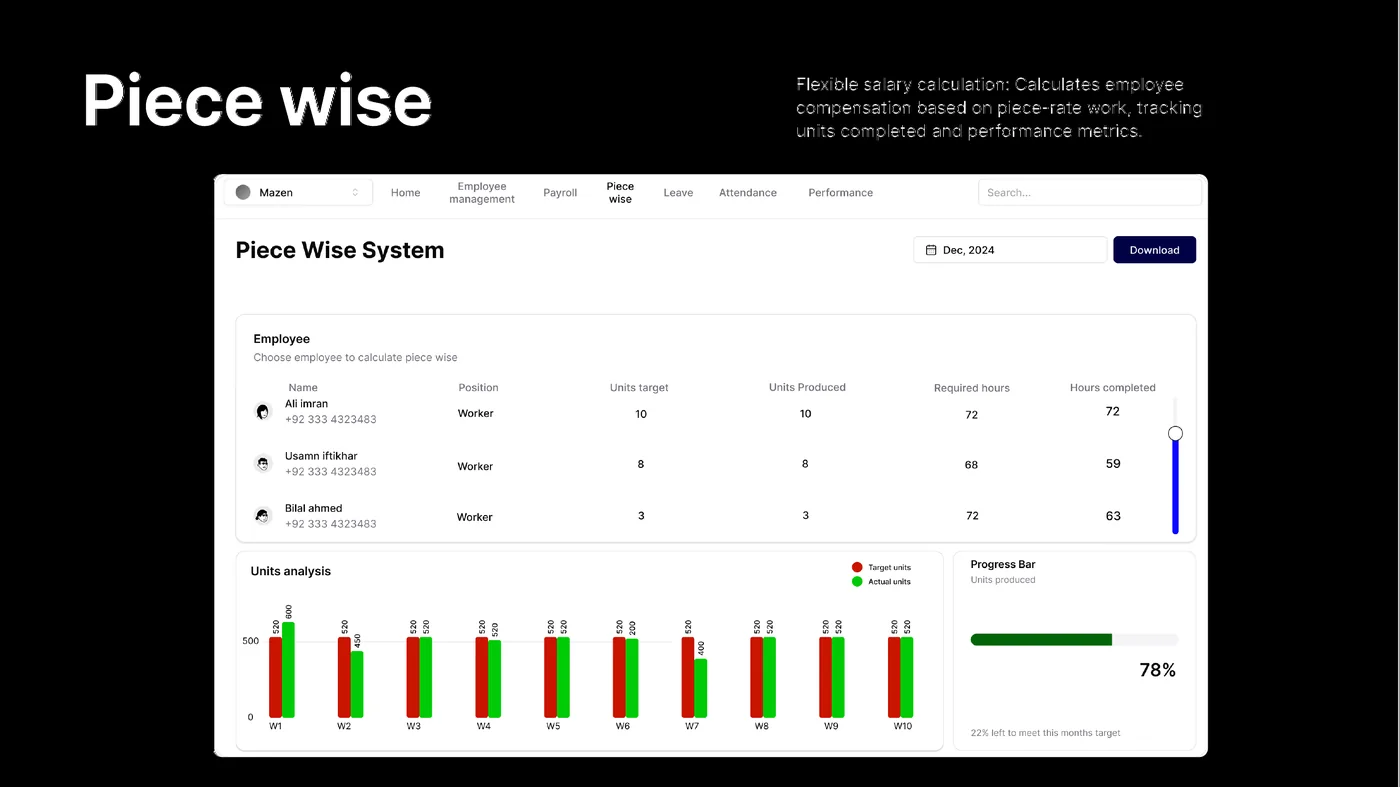
An employee management system for a workforce that is not uniformly salaried: some staff are paid monthly, some are paid per unit produced. Most HR tools treat piece-rate work as an afterthought bolted onto payroll. Here it is a first-class case, visible in the employee table itself alongside salary.
One navigation, seven modules
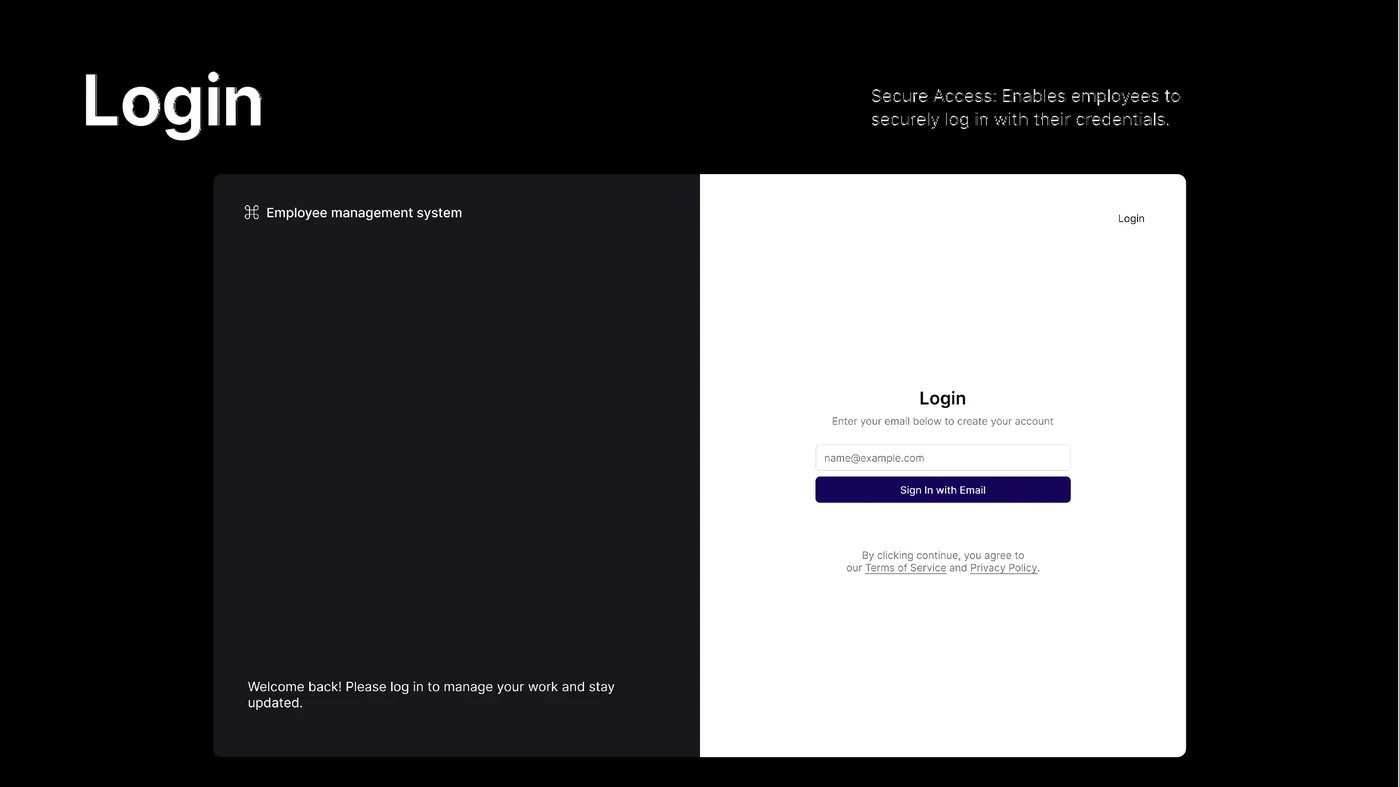
Every screen sits under the same persistent navigation (employee management, payroll, piece wise, leave, attendance and performance), so the system reads as one product rather than a set of tools. Each module opens on a table with the period selector and export in the same place, then adds the charts that module actually needs.
Designing for the exception
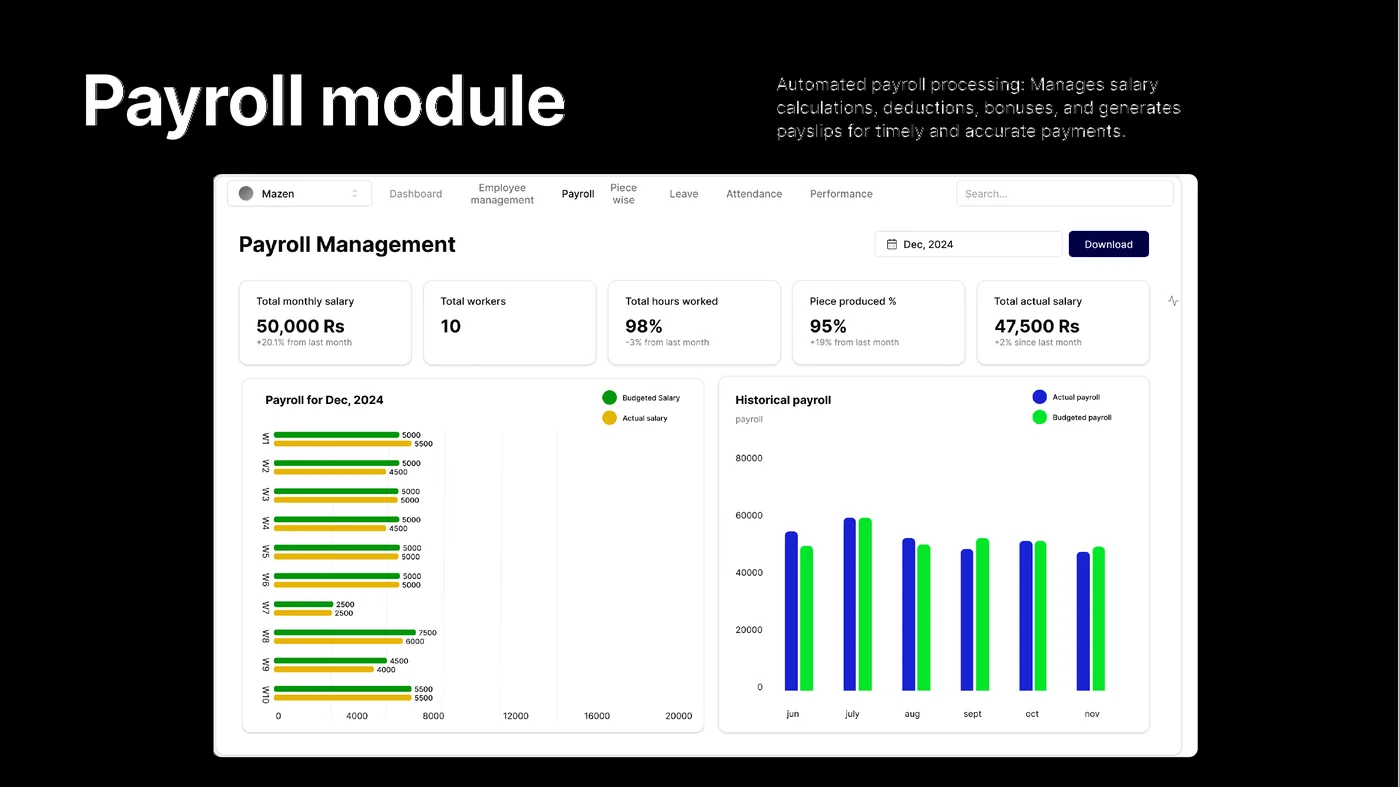
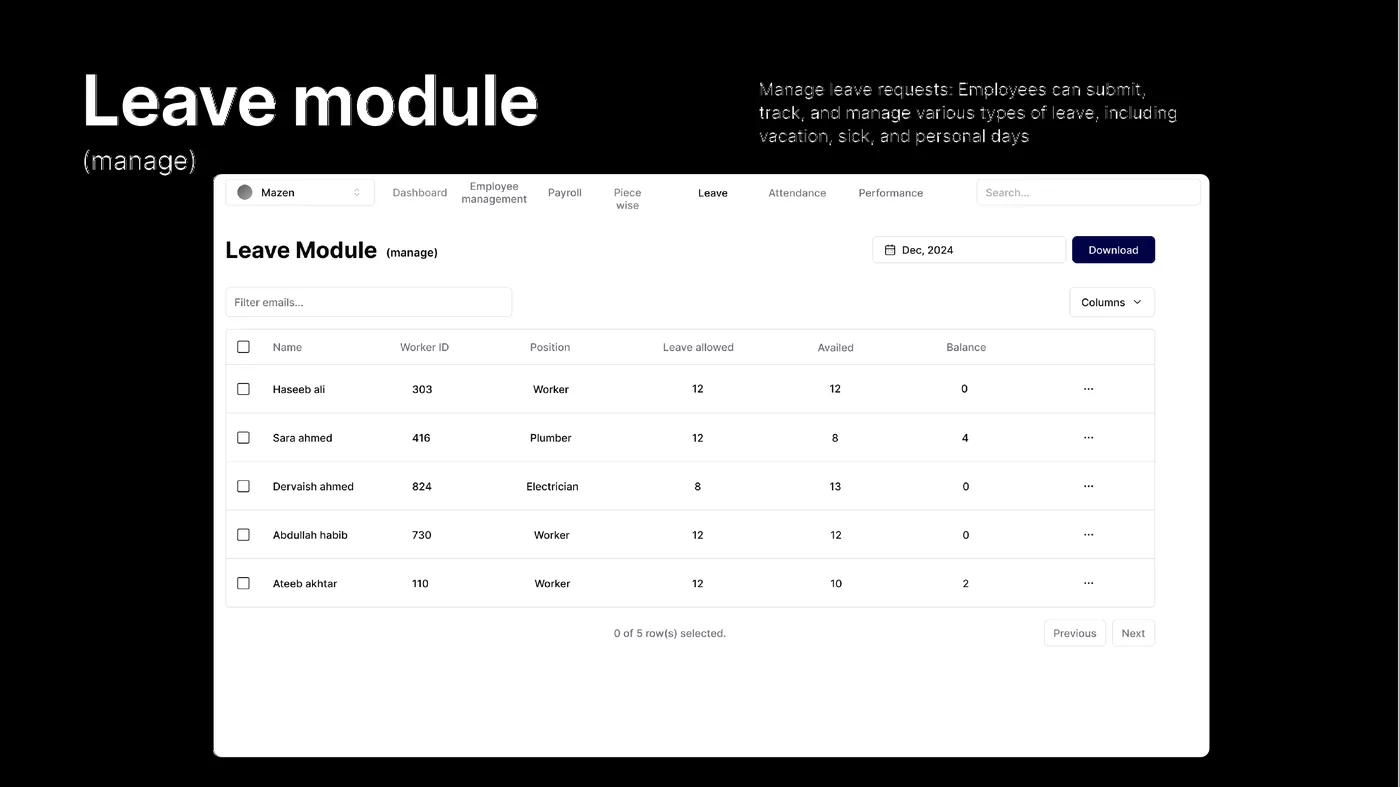
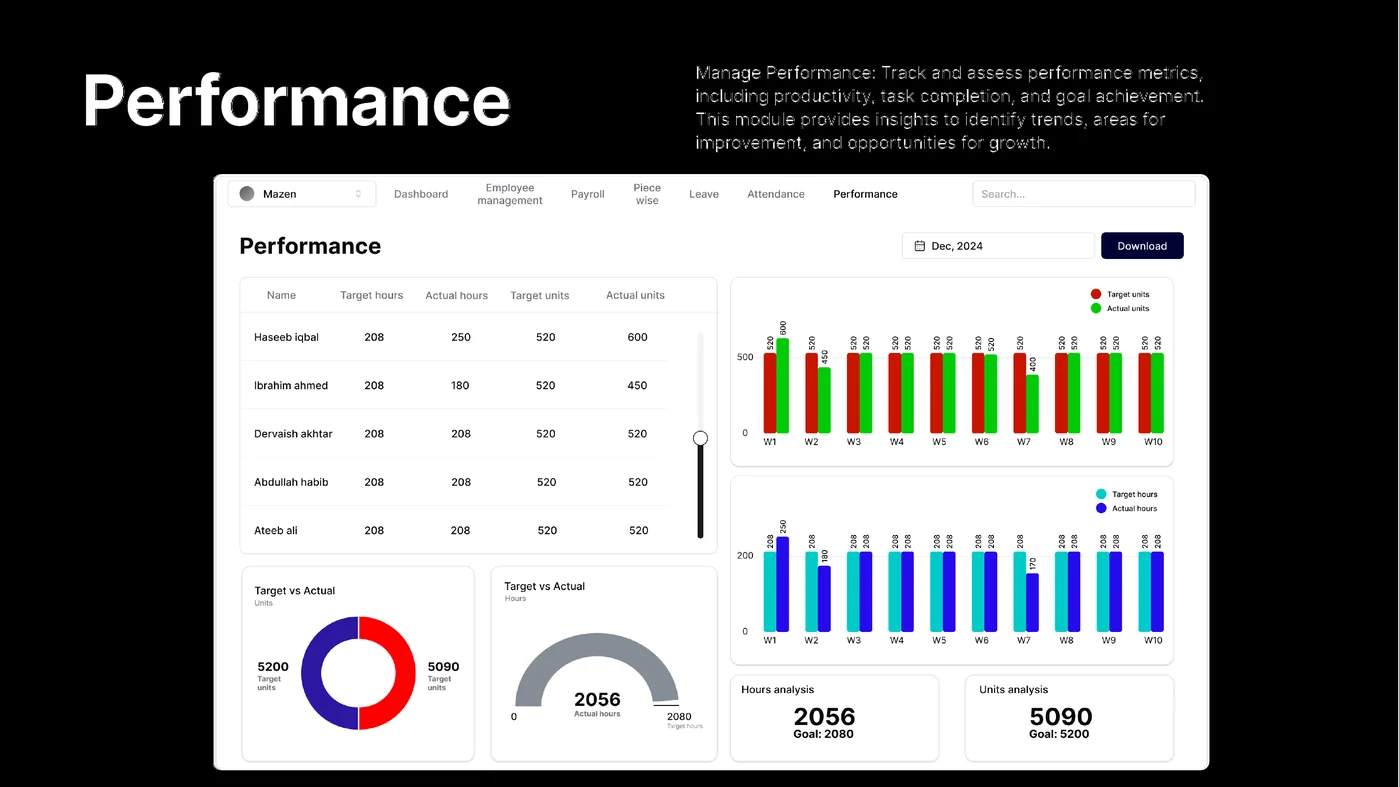
The screens are built so the thing that needs attention surfaces first. Payroll pairs KPI tiles with a budgeted-versus-actual comparison per worker and six months of history, so an overspend is visible before the detail. Leave shows allowance, availed and balance together, including the case where someone has taken more than they were allowed. Performance puts target against actual for both hours and units, with the shortfall weeks obvious in the bars.
Presentation
The deck is set on a black ground so each light interface reads as a product shot, with the module name and a one-line description carrying the narrative between screens.
Highlights
- Seven modules under one persistent navigation, each opening on a table with period selector and export in a consistent position.
- Piece-rate work is first-class: pieces per hour and units due sit in the employee table beside salary.
- Payroll pairs KPI tiles with budgeted-versus-actual per worker and six months of history, so exceptions surface before detail.
- Leave tracks allowance, availed and balance together, with the negative-balance case visible rather than hidden.
- Performance compares target against actual for both hours and units, week by week.